

Contents
- An Unexpected Encounter with the Island
- Bosa: The Place Where My Destiny Changed
- Preparing for the Move: A Decisive Step into the Unknown
- University of Sassari: A New Beginning
- Love Under the Sardinian Sun
- Finding Myself: Professional Development
- From Photographer to Tour Guide: How I Found My Calling
- Life at the Island's Rhythm: Slow Enjoyment
- Advantages of Life in Sardinia
- Disadvantages of Island Life: What You Should Know
- Parting from the Island and a New Life
- Longing for the Emerald Paradise: Future Plans
- Sardinia Forever in My Heart
An Unexpected Encounter with the Island
Sometimes the most important turns in our lives begin with disappointment. My journey to Sardinia opened precisely this way – through unfulfilled plans that turned into the most significant adventure of my life.
In 2008, I was planning a vacation with my partner. We chose a place, explored options, and finally settled on Sardinia – an island about which I knew surprisingly little, except that it had beautiful beaches and clear sea. We booked a hotel, bought tickets, but literally a week before the trip, our relationship ended. I stood at a crossroads: stay home nursing my broken heart, or embark on a solo journey to an unfamiliar place. After much hesitation, I decided to go alone.
At the airport, panic gripped me – what was I doing? Why was I flying somewhere unknown in such an emotional state? But when the plane landed in Alghero, and I stepped out under the bright blue Sardinian sky, something amazing happened. The first breath of warm Mediterranean air, filled with scents of sea and herbs, the first glance at the contrast of turquoise water and green Myrtle bushes – and my heart seemed to receive an electric shock. It was a strange, almost mystical feeling of recognition, as if I had returned home after a long absence.
Sitting in coastal cafés, watching the unhurried life of locals, I felt my problems gradually diminishing, dissolving in this special Sardinian air.
Everything here was different from my hometown, where life rushes at top speed, where every minute is scheduled and filled with tasks. In Sardinia, time seemed to slow down. People enjoyed simple things – conversations over a cup of espresso, lunches stretched over several hours, evening walks along the waterfront. No one was in a hurry, and this was a revelation for me, accustomed to living in constant time pressure.
I noticed how my inner state was changing. The anxiety and sadness I brought with me didn't disappear completely but transformed into something calmer and wiser. At that moment, I didn't yet know that this island would become my home for many years, but even then, something inside told me – this place is special, and it is somehow connected to my destiny.

Bosa: The Place Where My Destiny Changed
I chose the town of Bosa for my vacation only because there was a bus from Alghero airport. I had never heard of this place before, but I didn't want to stay in Alghero and wanted to see more of the island.
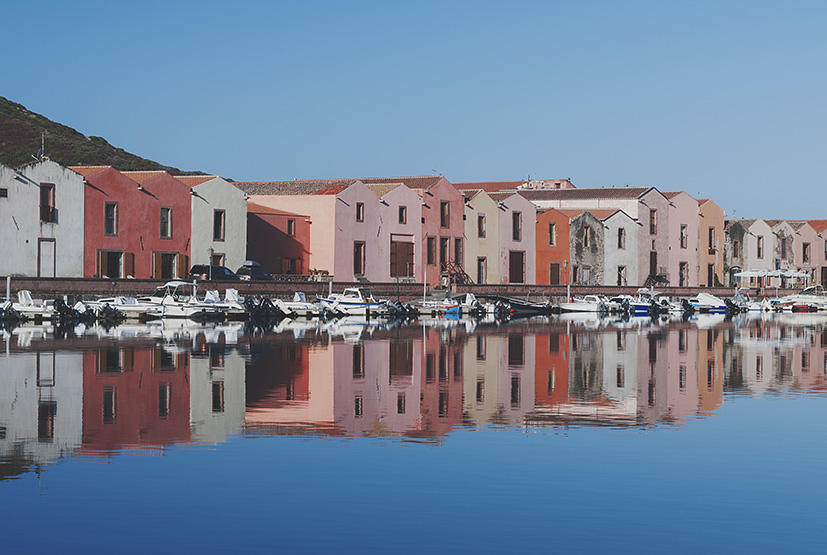
Bosa is an amazing place where time seems to have stopped several centuries ago. Located on the western coast of Sardinia on the banks of the Temo River, this town looks like a living painting: colorful houses of the old Sa Costa district climb up the hillside, above them rises the medieval Malaspina Castle, and below, the river flows smoothly into the sea.
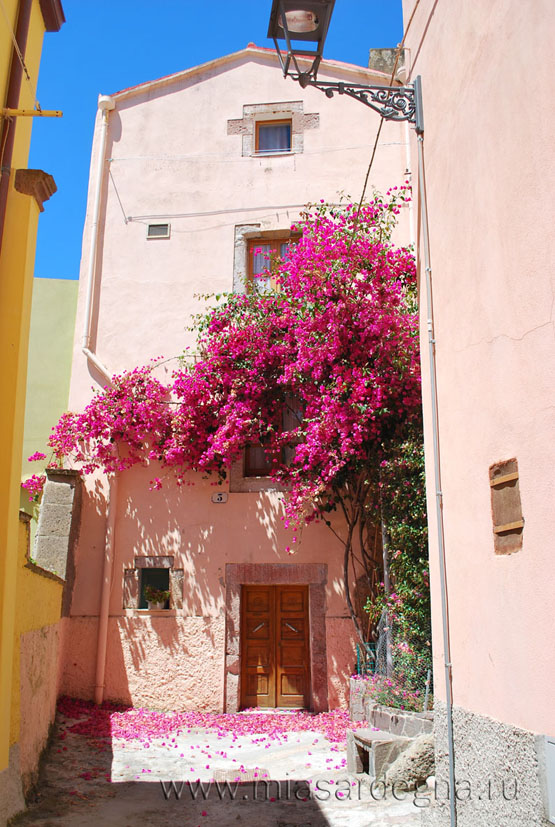
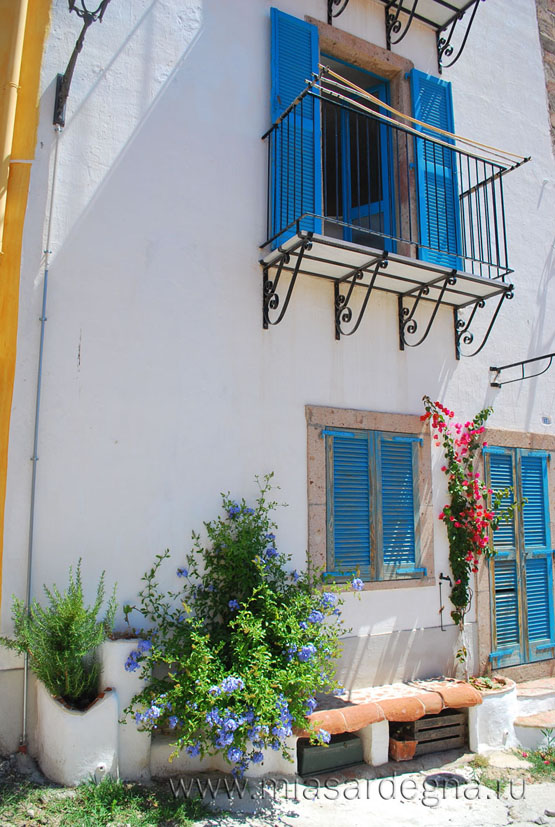
Getting off the bus, I went to wander through the narrow winding streets. Stone houses, painted in bright shades of yellow, pink, green, and blue, created the feeling that I had stepped into some kind of children's fairy tale. The heat was already subsiding, and locals were starting to come out onto the streets – elderly men sat on benches along the waterfront, discussing the day's news, children played right on the pavement, unafraid of cars, which were rare here.
I wandered into the historic center and found a cozy café in an old building. I ordered local Malvasia di Bosa wine – a golden, sweetish drink that has been produced here for many centuries. Sitting there, watching the unhurried life of the town and admiring the sunset that colored everything around in shades of pink and orange, I experienced a moment of absolute clarity. It was a sudden, almost physical sensation – this is it, the place where I should be.
Returning to St. Petersburg, I couldn't sleep at night – thoughts were spinning in my head, memories of my vacation, and an idea was forming that then seemed almost crazy: what if I could live in Sardinia? What if this island is not just a vacation spot, but something more?
One day I woke up with a firm decision: I would return to Sardinia not as a tourist, but as a person who wants to make this island her home. I didn't know how to accomplish this, what obstacles I would have to overcome, but the inner feeling was so strong that I couldn't ignore it. At that moment, a dream was born that became reality a year later.
Preparing for the Move: A Decisive Step into the Unknown
But how to turn this dream into reality? I had a stable job, an apartment, social connections – a whole life built over years. The thought of leaving it all for the unknown both frightened and excited me.
I started with the most obvious – I began studying Italian. I enrolled in courses, bought textbooks, found online conversation partners, watched Italian films without subtitles. At first, it was incredibly difficult. Italian seemed musical to me, but incomprehensible. However, with each day, I made small progress, and this gave me confidence.
In parallel, I researched the practical aspects of moving. How to get a residence permit? How to find housing? What employment options exist? I spent hours on expat forums, read blogs of people who had made similar moves, consulted with immigration lawyers.
Gradually, a plan took shape. I decided that the best way to establish myself in Sardinia was to enroll in a university. This would give me legal student status, the opportunity to fully immerse myself in the language and culture, and time to adapt and search for further paths. After extensive research, I chose the University of Sassari – one of the oldest universities in Italy, founded in 1562.
The process of submitting documents turned out to be a real test. Bureaucracy is something you have to accept if you plan to live in Italy. Endless certificates, attestations, translations, visits to the consulate... Sometimes it seemed that the system was specially designed to discourage foreigners. But each time I was ready to give up, I remembered that evening in Bosa, that feeling of absolute certainty, and this gave me strength to continue.
The financial question also required a solution. I started saving money, cut all non-essential expenses, began looking for someone to rent my apartment. According to preliminary calculations, I needed an amount that would allow me to live for at least a year without a stable income.
For a whole year, I prepared for the move, continuing to work at my previous job. Colleagues and management were surprised when I finally submitted my resignation. My family was also concerned, considering my decision adventurous, but they still supported me both morally and financially.
The last weeks before departure passed as if in a fog – selling belongings, terminating the lease, farewell parties... And then, exactly a year after my first encounter with the island, I was again standing at the airport with a one-way ticket and two suitcases, trying to fit my entire previous life into them.
This time there was no fear. There was excitement, anticipation, and the strange calmness of a person who is finally doing what they must.
University of Sassari: A New Beginning
When I finally moved to Sardinia, the first weeks proved challenging. Finding permanent housing in Bosa was a real test – locals prefer to rent to tourists for short periods during the season, not for a whole year. Luca and I walked around, it seems, the entire town, talked to locals, asked acquaintances. Finally, luck smiled upon us – a spacious apartment in the historic center, not in one of those colorful houses that had so charmed me during my first visit, but no less beautiful.
The apartment was old but had character – furniture from 1912, thick walls, and beautiful views of the town. I remember how we spent several days setting it up, buying furniture, painting walls, hanging pictures. Soon we got a cat – a black panther, which we named Leopolda. She was the real mistress of the house, proudly sitting on the windowsill and watching the life of the street.
Alongside setting up our home, classes at the University of Sassari began. I chose a program in foreign languages and culture. Studying was interesting, but logistically difficult – from Bosa to Sassari it's almost three hours by bus, or an hour by car, not counting the time to find parking.
Fortunately, the university provided me with a room in the student dormitory, where I stayed 2-3 days a week. It was a typical student room – minimal furniture, a common kitchen on the floor, a noisy student bar under the windows. But for me, it was just a temporary shelter – our apartment in Bosa became my real home.
Life in two cities had its difficulties, but also its charm. In Sassari, I immersed myself in the academic environment, communicated with other international students, attended cultural events. And in Bosa, I enjoyed the quiet, authentic life of a small coastal town, where over time the locals began to recognize me, greet me on the streets, invite me to family celebrations.
During this period, I started a blog about my life in Sardinia – I recorded observations about local traditions, shared photographs, told about the difficulties and joys of adaptation. Gradually the blog gained popularity, especially among compatriots interested in moving to Italy. It was unexpectedly pleasant – sharing my experience and seeing that it helps someone.
I also developed very warm relationships with Luca's family. The first meeting with his parents was emotional – I knew that family ties in Italy are strong, and parental approval means a lot. His mother welcomed me with a traditional Sardinian lunch, and the house impressed me with its comfort and style. His father, a quiet and serious man, initially kept his distance but melted when I showed sincere interest in the history of their home and family traditions.
They accepted me with surprising warmth. My background and accent not only weren't obstacles but, on the contrary, aroused interest. But to be fair, the French wife of Luca's brother had paved the way for me. Thanks to her, a Russian daughter-in-law no longer seemed so exotic! On Sundays, the whole extended family gathered at the parents' house, and I gradually became part of these gatherings.
Life with Luca opened up a completely new Sardinia for me. We traveled to the most remote corners of the island, where tourists rarely go – visited ancient nuragic complexes, villages lost in the mountains where people still speak different Sardinian dialects, and hidden coves with crystal clear water.
But the most valuable was not access to these secret places, but the opportunity to see the island through the eyes of someone for whom every stone, every tree, every tradition is filled with deep personal meaning.
Our relationship wasn't cloudless – different cultural habits, language misunderstandings, different attitudes toward planning and time sometimes led to conflicts. But it was through these difficulties that I gained a deeper understanding of the Sardinian mentality as a whole – a mixture of passion and restraint, traditionalism and openness to the new, proud independence and deep devotion to family.
Love Under the Sardinian Sun
During my second visit to Sardinia in autumn 2009 (still before the final move), I met someone who changed all my plans. I met Luca – a Sardinian who became the reason for my move to Bosa specifically, not to Sassari, as I had initially planned.
Our meeting happened by chance on the beach in Bosa Marina. A beautiful sunny day, azure water, and an almost deserted shore – I was enjoying solitude and silence when I heard his "Ciao!" A conversation began that continued until sunset.
Luca, a native Sardinian from Bosa, was surprised to meet a foreigner so in love with his native island. He was curious about what exactly I found in Sardinia that the locals themselves don't see. When I told him about my special relationship with Bosa, about that magical vacation I had during my first visit, his eyes lit up – he was born and raised in this town and considered it the most beautiful place in Sardinia.
This meeting began a relationship that developed rapidly. We spent the next few days together – Luca showed me his favorite places on the island, I told him about my plans to move for studies in Sassari. By the end of my stay, it was clear – something more than just a holiday romance had developed between us.
Returning home to complete work matters and prepare for the move, we continued to communicate daily. And then a new idea was born – to live in Bosa with Luca, and travel to Sassari only for classes. It was a bold decision – I barely knew the person I was planning to live with, and the town, although I had fallen in love with it, remained practically unknown. But intuition suggested that this was the right choice, especially since there was still a year before the move. During that year, I visited Sardinia two more times, and Luca came to visit me in Russia.
Finding Myself: Professional Development
When my savings began to rapidly dwindle, the question of finding work on the island became acute.
Sardinia, despite all its natural riches and tourist appeal, remains one of the economically challenging regions of Italy. High unemployment, especially among young people, seasonal employment related to tourism, limited opportunities for professional growth – I observed all this around me every day.
My first job searches were unsuccessful. I sent resumes to companies but didn't even receive responses. It was especially difficult in winter when finding work until the next season was simply unrealistic, and time dragged on endlessly.
One day a thought came to me: "Maybe the problem isn't the lack of jobs, but that I'm looking for the wrong job? What if I create something of my own, using my unique skills and love for the island?"
This idea made me think. What could I do in Sardinia that would bring not only income but also satisfaction? Which of my talents and experiences could be in demand here?
From Photographer to Tour Guide: How I Found My Calling
In my previous life, photography was a serious hobby, and in Sardinia, this passion only intensified – every corner of the island begged to be captured. I began deliberately creating a portfolio, photographing not only picturesque landscapes but also local cuisine products, architectural details, portraits of island residents. Then I sent my work to several photo banks and, to my surprise, they were accepted.
In parallel, I began offering my services to local restaurants and hotels – photo sessions of dishes for menus, interiors for websites. The first clients came thanks to recommendations from acquaintances, then word of mouth worked. The income was small and unstable, but it was my own business, my place in the local economy.
Everything changed when one day I was offered a job with a local tour operator focused on individual tours in the richest area of the island, Costa Smeralda.
At first, I had doubts – would my knowledge of Sardinia be enough to conduct tours? But the agency owner convinced me that my experience as a person who fell in love with the island and consciously chose it as home could be interesting to tourists tired of standard narratives.
My first tours were terribly exciting. I prepared for hours, studying the history and culture of places I was going to show, rehearsing my speech. I was afraid that clients would be dissatisfied, that my knowledge would prove insufficient, but to my surprise, tourists were delighted. They liked my enthusiasm, my unconventional view of things, my ability to connect local traditions with parallels from other cultures. And my status as a "local foreigner" even added a special flavor – I could explain many things that local guides considered self-evident and skipped.
Gradually, I expanded the geography of my routes, mastered new themes – from culinary tours to archaeological excursions. Thanks to this work, I traveled all over the island, from popular resorts to lost mountain villages of Barbagia. Each new route required thorough preparation, and through this preparation, I became increasingly immersed in Sardinian culture, history, and traditions.
Working as a guide brought not only financial stability but also enormous satisfaction. Seeing how people discover Sardinia, fall in love with it, how their perception changes – from the stereotypical "island with beautiful beaches" to understanding the depth and multifaceted nature of this place – was true happiness.
The only thing I didn't like about this job was its seasonality! I practically didn't sleep in summer due to the intensive schedule, while in winter I found myself completely free.

Life at the Island's Rhythm: Slow Enjoyment
One of the most difficult aspects of adapting to life in Sardinia for me was a completely different rhythm of life. In the first months, I constantly struggled with the feeling that everything around was moving too slowly. Queues in government offices where no one is in a hurry. Lunch breaks stretching for hours. Communication where the process itself is important, not the result or time-saving.
This slowness initially irritated me and caused misunderstanding. How can you spend two hours on lunch on a workday? Why is only one window out of five working at the post office, and no one is bothered by this? Why start a business meeting with a half-hour conversation about weather, family, and football?
I tried to bring my previous tempo into my new life – I walked quickly, spoke quickly, tried to "optimize" any processes. Locals looked at me with slight bewilderment, and sometimes with sympathy, as if I were someone who clearly doesn't understand something important.
And gradually I began to understand that there is deep meaning in this slowness. It's not laziness or inefficiency – it's a different philosophy of life. Sardinians don't rush because for them, the quality of each moment is important, not the number of completed tasks. Lunch is not just a meal, but a time for communication, rest, switching. A conversation before a business meeting is a way to establish human contact, without which any business would be mechanical and soulless.
I began to notice that in this slow rhythm there is a special enjoyment of life. When you're not in a hurry, you start noticing details – architectural decorations of buildings you pass every day, shades of sea water at different times of the day, aromas of blooming plants changing with the seasons. You more fully feel the taste of food, more deeply perceive music, listen more attentively to the interlocutor.
Of course, sometimes I still got tired of this pace, especially when dealing with bureaucratic procedures or when I needed to urgently resolve some issue. And I had periods of longing for dynamic city life, for cultural events, for that energy that bubbles in big cities.
But with each year, I increasingly valued this special island rhythm, this ability of Sardinians to live here and now, not sacrificing the present for the future. And I imperceptibly slowed down myself, learned to enjoy the moment, to be present in it completely, rather than running ahead in my thoughts to the next task.
Advantages of Life in Sardinia
During my six years of living in Sardinia, I discovered many advantages of this amazing place. Some of them were obvious from the beginning, others I realized only over time.
Quality of products and food. In Sardinia, I understood what real food is – fresh, natural, grown with love. Tomatoes that smell like tomatoes, meat from animals grazing on mountain meadows, olive oil pressed from olives harvested from trees that are several hundred years old. Here, a culture of respect for food has been preserved – they don't rush to produce it on an industrial scale, don't try to cheapen it at the expense of quality. Lunches prepared by Luca's mother were true gastronomic journeys – not only because of culinary mastery but also because of the impeccable quality of ingredients.
Sea and nature. Sardinia is known for its beaches, and for good reason – crystal clear water in shades from emerald to deep blue, snow-white sand or bizarre rocks, virtually untouched coastlines. But not only the sea makes Sardinia's nature unique. There are mountains with wild forests where mouflon and wild boars live, valleys covered with poppies and asphodels in spring, plateaus with bizarre rock formations. And all this is within a few hours' drive from each other. The ability at any moment to get in a car and in an hour be on a deserted beach or in the mountains, where nothing can be heard except the sound of the wind – this is a luxury difficult to overestimate.
High level of safety. Sardinia is one of the safest regions of Italy. Here you can safely walk the streets at any time of day or night, leave doors and windows unlocked, not worry about a bag left unattended on the beach. Of course, crime exists here too, but its level is incomparably lower than in big cities. This creates a special atmosphere of trust and tranquility, which contrasts sharply with the constant vigilance necessary in megalopolises.
Friendliness of people. Sardinians are famous for their hospitality, and I can confirm – this is not just a tourist slogan. Locals initially may seem a bit wary, but they quickly open up and become friends for life. They are happy to help, share information, invite you into their homes. But at the same time, Sardinians are not intrusive – they respect private life and personal space. This unique combination of openness and restraint creates a very comfortable social environment.
Cultural wealth. Sardinia is not just beaches and nature. It's an island with an amazingly rich and ancient culture, which formed over millennia under the influence of various civilizations – from the mysterious nuragic culture to the Phoenicians, Romans, Byzantines, Spaniards. This heritage is evident in everything – in architecture, crafts, cuisine, customs, festivals. Here you can endlessly explore and discover something new – from prehistoric nuraghi to medieval churches, from traditional costumes to unique musical instruments.
Quality of life. Despite economic difficulties, the overall quality of life in Sardinia is very high. There is a wonderful climate, clean air and water, healthy food, a measured pace of life without excessive stress. All this affects longevity – Sardinia is among the so-called "blue zones," regions with a record number of long-lived people. And I felt from my own experience how well-being changes in such an environment – less stress, better sleep, more energy, less frequent illness.
Disadvantages of Island Life: What You Should Know
Of course, life in Sardinia wasn't an idyll. As in any place, there are difficulties and problems here, which I learned from my own experience.
Employment difficulties. Perhaps this is the most serious problem in Sardinia. The island suffers from chronic unemployment, especially among young people. Many are forced to leave for the mainland or abroad in search of work. For foreigners, the situation is even more complicated – language barrier, the need to validate diplomas, bureaucratic obstacles to obtaining a work permit. I was lucky to find my niche, but I saw how many of my acquaintances struggled for the opportunity to stay on the island they loved but where they couldn't support themselves.
Transportation problems. Moving around Sardinia without your own car is very difficult. Public transport is poorly developed, especially in rural areas, and between many settlements, buses run only a few times a day or don't run at all. The railway network covers only part of the island, and trains are often late or canceled. On one hand, this protects Sardinia from excessive tourism and preserves its pristine state; on the other hand, it creates serious inconveniences for residents.
Seasonality. Sardinia's economy is heavily dependent on tourism, and this creates a stark contrast between summer and winter seasons. In summer, the island is buzzing with life – all restaurants and shops work, festivals and concerts are held, beaches are filled with people. In winter, many coastal towns seem to hibernate – hotels and restaurants close, transportation schedules are reduced, cultural life comes to a standstill. In my first winter, this was a real shock for me – I didn't expect such a contrast and often felt isolated.
Bureaucracy. Italy is famous for its bureaucracy, and Sardinia is no exception. Any official procedure – from obtaining a residence permit to connecting the internet – turns into a multi-stage process with endless forms, stamps, visits to various institutions. For a foreigner, this is especially difficult – it's not always clear where to go, what documents are needed, how to correctly fill out forms in Italian.
Limited opportunities for professional development. This doesn't apply to all fields, but many. There are few large companies, research centers, high-level cultural institutions in Sardinia. For specialists in some areas, this means limited opportunities for career growth, continuing education, professional networking. I knew several musicians and artists who were forced to regularly travel to the mainland or even abroad to participate in exhibitions, concerts, masterclasses because there were practically no such opportunities on the island.
Isolation. Sardinia is the second largest island in the Mediterranean Sea, but it's still an island, and the feeling of isolation sometimes becomes very strong. A trip to the mainland is always a whole journey, with a plane or ferry, requiring time and money. For me, this sometimes became a psychological test – the feeling that you are "locked" on the island, especially in the winter months, when there are fewer flights and they are more expensive.
Despite these disadvantages, I never regretted my decision. Any place has its pros and cons, and it's important to understand them in order to make an informed choice and be prepared for the difficulties that will inevitably arise.
Parting from the Island and a New Life
In 2016, after six years of living in Sardinia, my relationship with Luca came to an end. It was a difficult but mutual decision – we both understood that we were moving in different directions and wanted different things from life.
After the breakup, I found myself at a crossroads. Stay in Sardinia, where everything reminded me of our relationship? Return to my homeland? Or try something completely new? After much deliberation, I decided to move to Rome. It was a compromise – I remained in Italy, maintaining language skills and the ability to easily visit beloved Sardinia, but at the same time opening a new chapter of life in one of the most dynamic cities in the world.
Moving to Rome was a culture shock – after quiet, provincial Sardinia, I found myself in a noisy, crowded metropolis with an intense rhythm of life. Eternal traffic jams, crowds of tourists, constant noise – all this initially caused stress and nostalgia for the peaceful island life.
But gradually I began to appreciate the advantages of a big city – rich cultural life, diversity of opportunities for professional development, international atmosphere, convenience of the transportation system. In Rome, I continued to engage in photography, mastered web design, made new friends, discovered new hobbies and new love.
And yet, despite all the advantages of Roman life, I often caught myself thinking about Sardinia. I missed the emerald sea and mountain air, the silence of deserted beaches off-season, the special intimacy of small towns where everyone knows each other. I even missed those things that once irritated me – the slowness of Sardinians, their reluctance to hurry, their special relationship with time.
Longing for the Emerald Paradise: Future Plans
Now, years after moving from Sardinia, I find myself thinking more and more often about returning – at least partially. I dream of a small house somewhere in a coastal village where I could come for a few months a year, especially in summer, when Rome heats up from the heat, and Sardinia delights with cool maestrale winds.
I'm considering different options – from buying a small apartment to participating in programs for restoring abandoned houses in mountain villages, which some Sardinian communes offer. I'm exploring remote work opportunities that would allow me to spend extended time on the island without losing income.
Of course, I understand that the Sardinia I find may differ from the one preserved in my memory. Over these years, the island has also changed – tourism has developed, new technologies have come, economic conditions have changed. And I myself have changed – no longer that naive girl who once came to learn the language and fell in love with a local.
And yet I believe that the essentials have remained unchanged – that special energy that once literally healed me from emotional wounds. That special quality of light that makes all colors brighter. That special rhythm of life that teaches to value the moment. Those welcoming people who once accepted me as their own. All this is the essence of Sardinia, its soul, which lives despite any external changes.
Sardinia Forever in My Heart
Looking back at my six-year experience of living in Sardinia, I understand that it was one of the most important and formative chapters of my life. This island taught me many things – to value simple joys, to enjoy the moment, to find beauty in the ordinary, to build deep human connections.
Life in Sardinia changed me – I became more patient, learned to accept things I cannot change, began to more deeply appreciate nature, traditions, the connection between generations. I acquired a new language, a new culture, new skills, but most importantly – a new outlook on life, more calm and harmonious.
If someone asked me if I would move to Sardinia again, knowing all the difficulties I would face, I would answer: "Yes, yes, and yes again!" Because all these difficulties were part of the journey that made me who I am now. They were the price I gladly paid for the chance to touch the amazing world of this island, for the opportunity, even temporarily, to become part of it.
And even though I now live in Rome, Sardinia will forever remain in my heart as a place of power, as a second home, as a part of myself. And I know that sooner or later, roads will lead me back there, to the emerald shores of the island that once so unexpectedly changed my life.

Subscribe to my Newsletter