


Reading time: 10 minutes
Table of Content
Introduction
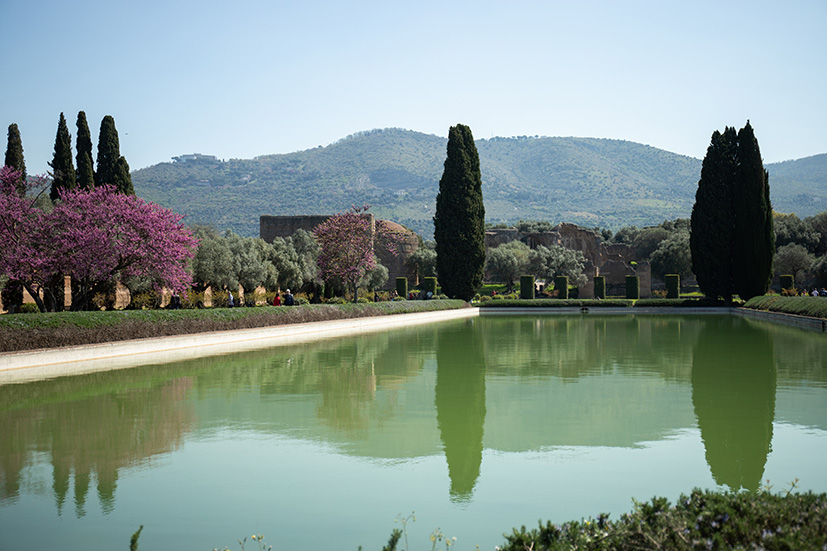
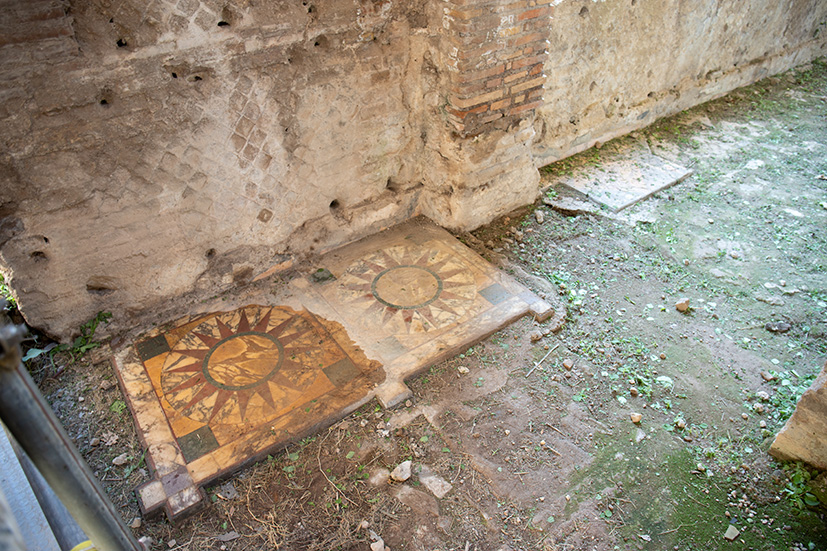
Villa Adriana is a museum I never get tired of visiting, a place full of fascinating history that gives me new emotions each time. When I step through the entrance of this immense archaeological complex, I feel like I'm taking a journey back in time to the golden age of the Roman Empire. Walking among these ancient ruins allows me to imagine the grandeur of the imperial villa and the cultural vision of Hadrian, an enlightened emperor who wanted to recreate here the most beautiful places he had seen during his travels.
Located in Tivoli, just 28 km from Rome, Villa Adriana is one of the most important examples of ancient Roman architecture that has survived to this day. Declared a UNESCO World Heritage Site in 1999, it is considered the largest imperial villa ever built, covering an area of about 120 hectares. This extraordinary archaeological complex is not only a must-see for anyone visiting the surroundings of Rome but also one of the most fascinating destinations for a day trip from the capital, offering a unique glimpse into the grandeur of ancient Rome and the eclectic personality of Emperor Hadrian.
I’ll guide you through this archaeological treasure, sharing all the useful information to help you plan your visit — from its history and the most significant highlights to the opening times, ticket info, and practical tips to make your experience unforgettable.
History
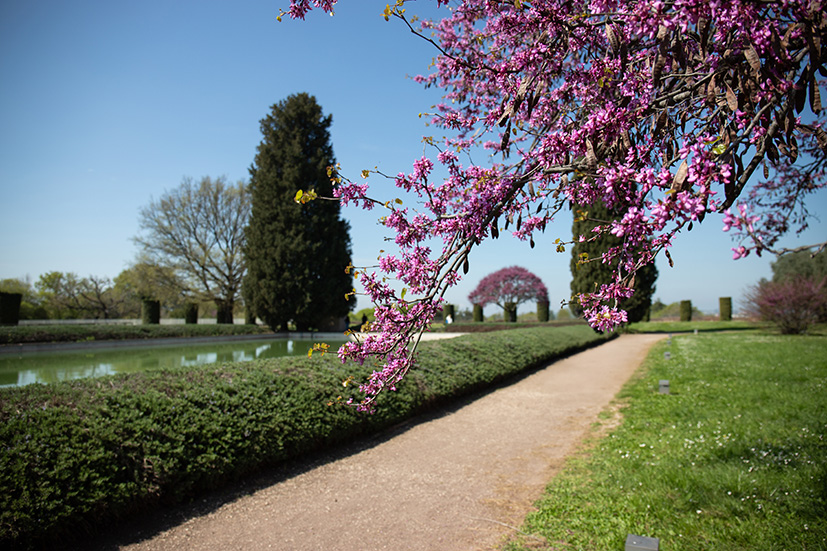
The construction of Hadrian’s Villa began in 118 AD, shortly after the emperor Publius Aelius Hadrian ascended to the throne. Unlike many of his predecessors, Hadrian did not enjoy the imperial palace on the Palatine Hill in Rome and disliked the chaos of the Eternal City. For this reason, he decided to create a retreat in the countryside of Tivoli, where he could rule the empire “from a distance, but not too far.”
The site was not chosen at random: the area, rich in water and thermal springs (such as the Albule Waters, still known today as the Baths of Tivoli), offered an ideal environment for an imperial residence. Moreover, the surroundings provided abundant building materials such as travertine, tuff, and limestone, which were essential for such an ambitious project.
The villa was not built entirely from scratch but incorporated a modest preexisting Republican-era villa, probably owned by a patrician family. The construction works lasted for about 20 years, covering almost the entire reign of Hadrian, and can be divided into three main phases: from 118 to 121 AD, from 125 to 128 AD, and from 134 to 138 AD.
What makes Hadrian’s Villa unique is that it was designed by the emperor himself, a great enthusiast of architecture and Greek culture. After traveling extensively through the provinces of the empire, Hadrian sought to reproduce in his residence the places and monuments that had most impressed him during his journeys. As the historian Aelius Spartianus wrote: “He built with exceptional splendor a villa at Tivoli where he reproduced with their names the most famous places of the provinces of the empire, such as the Lyceum, the Academy, the Prytaneion, the city of Canopus, the Poikile Stoa, and the Vale of Tempe; and, not to omit anything, he even had the underworld represented there.”
After Hadrian’s death in 138 AD, the villa continued to be used by the imperial family at least until the 3rd century, as evidenced by the discovery of busts of later emperors and restorations confirmed by brick stamps. However, starting in the 4th century, the complex was gradually abandoned and during the Middle Ages became agricultural land and a quarry for valuable building materials. Many of the sculptures and marbles that originally adorned the villa were removed and reused in other structures.
It wasn’t until the Renaissance that Hadrian’s Villa once again drew attention. The first topographic survey was carried out in 1560 by Pirro Ligorio, and since then, numerous archaeological excavations have brought much of the original villa back to light.
What to see
The Canopus
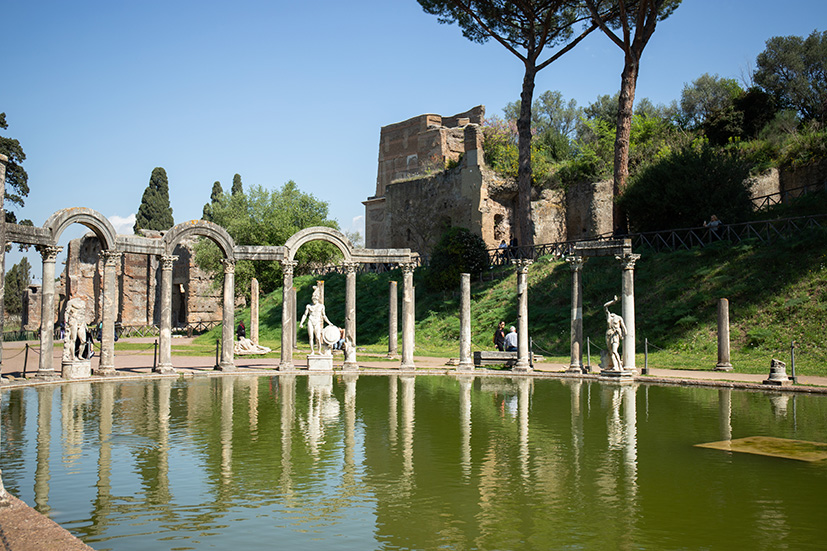
The Canopus is perhaps the most well-known and photographed area of Hadrian’s Villa. This long water basin (120 meters) takes its name from the Egyptian city of Canopus, located in the Nile Delta. The structure features a canal surrounded by columns and statues, ending with an elegant semicircular building called the Serapeum.
What makes this place particularly enchanting is the interplay of reflections created by the water, mirroring the surrounding statues and columns. The sculptures that decorate the Canopus are copies of famous Greek works, such as the Caryatids from the Erechtheion in Athens. At the end of the canal lies the imperial triclinium, where Hadrian dined with his guests, surrounded by fountains and water displays.
The Maritime Theatre
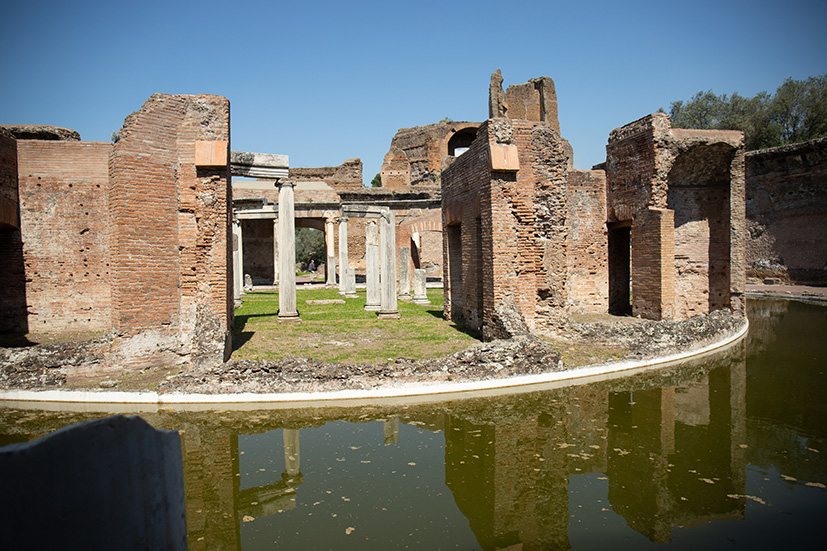
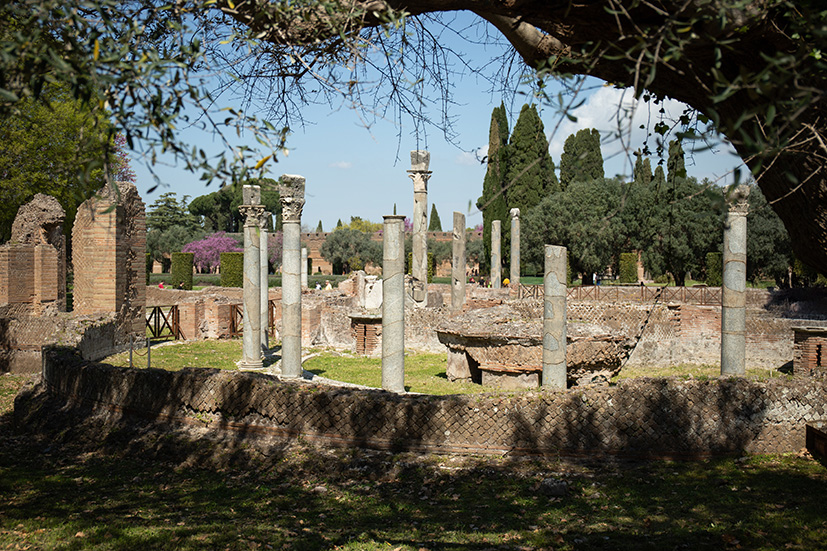
The Maritime Theatre is one of the most original and fascinating structures in the villa. Contrary to what the name suggests, it is not a theatre but an artificial island surrounded by a circular canal. On this island stood a small building, a sort of miniature villa with all comforts: baths, latrines, resting rooms (cubicula), and even a small library.
The island was accessible only via two rotating wooden bridges, which could be withdrawn to guarantee the emperor complete privacy. It is believed that this was Hadrian’s personal retreat, where he could isolate himself to think and rest, far from the outside world.
The Pecile
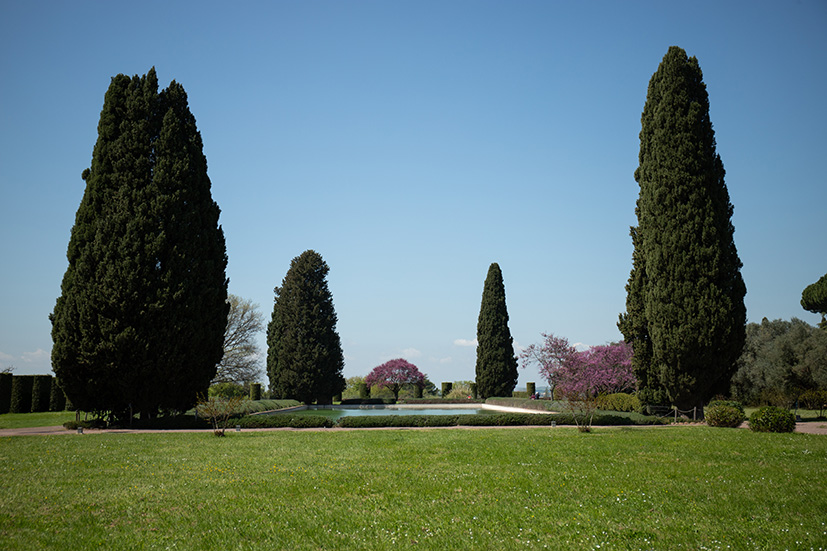
The Pecile is a vast rectangular courtyard surrounded by a portico, inspired by the Stoa Poikile (Painted Porch) of the Athenian Agora, the cultural heart of the Greek city. At the center of the Pecile was a large garden with a pool, used for strolling both in summer and winter.
The portico, originally covered, was supported by columns and measured approximately 230 meters per side. A unique feature was the central wall, 9 meters high, which divided the space into two corridors: one facing north for shaded summer walks, and one facing south for sunlit winter walks.
The Baths
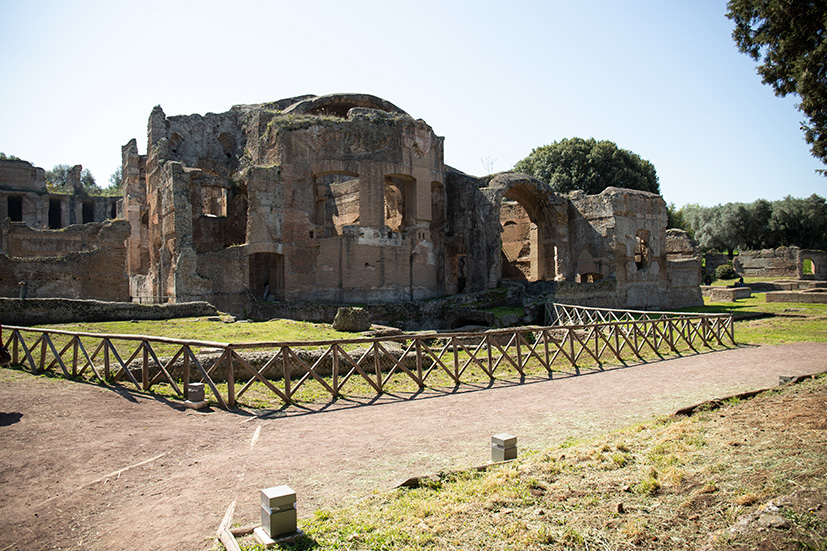
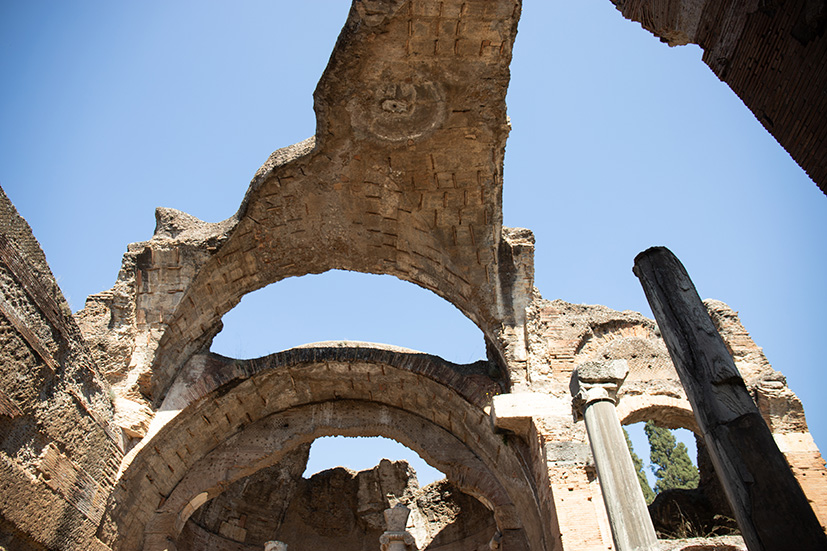
There are two main bath complexes at Hadrian’s Villa: the Small Baths and the Large Baths. The Small Baths were reserved for the imperial family and distinguished guests, while the Large Baths were used by the villa’s staff.
Both complexes follow the typical layout of Roman baths, with a frigidarium (cold room), tepidarium (warm room), and calidarium (hot room). Particularly noteworthy is the coffered dome of the frigidarium in the Small Baths, featuring a central circular opening similar to that of the Pantheon in Rome.
Piazza d'Oro
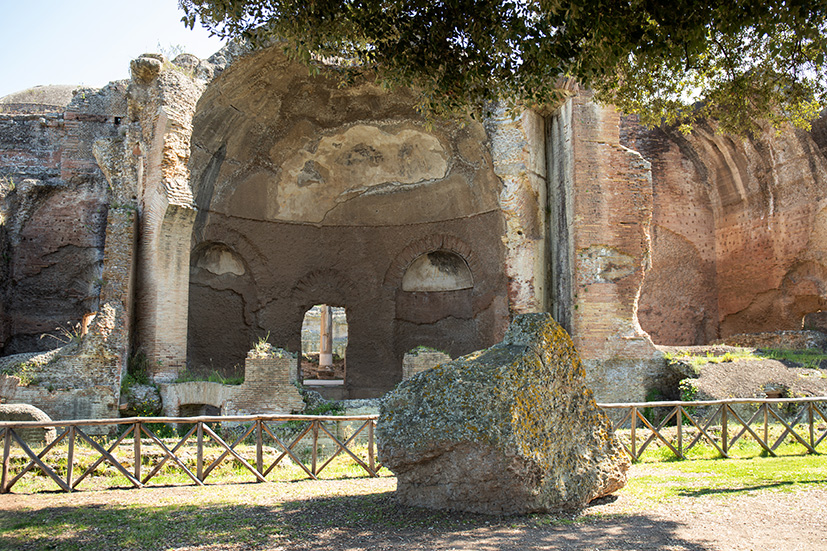
The Piazza d’Oro is a vast complex that likely served as a ceremonial or reception area for the emperor. It consists of a large rectangular peristyle surrounded by a double-nave portico with columns made of cipollino marble and Egyptian granite.
At the center of the peristyle was an elegant garden with an octagonal pool, while on the eastern side stood an octagonal pavilion topped by a dome—one of the most innovative examples of Hadrianic architecture.
Practical information
How to get there
Villa Adriana is located in Tivoli, about 28 km from Rome, and can be reached in several ways:
By car: Take the A24 motorway (Rome–L’Aquila), exit at Tivoli, and follow the signs to Villa Adriana. Paid parking is available on site.
By public transport:
-
Metro: Take Line B to Ponte Mammolo, then the COTRAL bus toward Tivoli/Villa Adriana. The stop is about 300 meters from the villa entrance.
-
Train: From Termini or Tiburtina stations, take a regional train to Tivoli, then the CAT line 4 bus (“Ville di Tivoli”) to Villa Adriana.
Don’t have a car and want to visit both Villa Adriana and Villa d’Este in one day?
There’s a popular guided tour from Rome that includes transportation, entry tickets, and visits to both Villa Adriana and Villa d’Este.
Take a look at this highly rated tour.
Opening hours and tickets
The Archaeological Area of Villa Adriana is open every day from:
from October 27, 2024 to January 26, 2025
8.15 am – 5.00 pm (last admission 3.45 pm)
Mouseia 9.15 am – 4.30 pm
from January 27 to March 2, 2025
8.15am – 5.30pm (last admission 4.15pm, Mouseia 9.15am-5.00pm)
from March 3 to March 29, 2025
8.15am – 6.30pm (last admission 5.15pm, Mouseia 9.15am-6.00pm)
from March 30 to September 14, 2025
8.15am – 7.30pm (last admission 6.15pm, Mouseia 9.15am-7.00pm)
from September 15 to September 28, 2025
8.15am – 7.00pm (last admission 5.45pm, Mouseia 9.15am-6.30pm)
from September 29 to October 25, 2025
8.15am – 6.30pm (last admission 17.15, Mouseia 9.15-18.00)
from October 26, 2025 to January 25, 2026
8.15 – 17.00 (last admission 15.45, Mouseia 9.15-16.30)
Tickets for Villa Adriana can be purchased directly at the on-site ticket office or online through the official website. Here are the prices:
-
-
Full ticket: €12
-
Reduced ticket (EU citizens aged 18 to 25): €2
-
Free admission for visitors under 18, teachers, journalists, and other eligible categories.
-
Best time to visit
The best time to visit Villa Adriana is from spring to autumn, when the weather is milder and the gardens are in full bloom. However, it's advisable to avoid the hottest hours during the summer months (June to August) by opting for a morning or late afternoon visit.
April, May, September, and October offer a good balance between pleasant weather and fewer crowds. On weekends and public holidays, the site tends to be busier, so it's best to plan your visit on a weekday if possible.
Guided tours
To fully appreciate the historical and architectural richness of Villa Adriana, joining a guided tour is highly recommended. Several options are available:
-
Official guided tours organized by CoopCulture, bookable online or at the ticket office
-
Audio guides available in several languages (Italian, English, French, Spanish, German)
-
Private tours with licensed guides
-
Organized tours from Rome, often combining Villa Adriana with a visit to Villa d’Este
Guided tours generally last 1.5 to 2 hours and allow visitors to discover not only the main monuments but also anecdotes and curiosities about Emperor Hadrian’s life and the history of the villa.
*Book Tours and Activities in Tivoli
**By clicking the banner, you'll be redirected to our partner’s website to book tours and experiences. www.Miasardegna.eu is not responsible for services purchased through external platforms
Free entry
It is possible to visit Villa Adriana for free on specific days:
-
The first Sunday of the month
-
April 25th (Liberation Day)
-
June 2nd (Republic Day)
-
November 4th (National Unity and Armed Forces Day)
On these days, advance booking is not available, and entry is allowed until the site reaches its maximum capacity. Therefore, it is recommended to arrive early in the morning to avoid long queues.
What to see nearby
Tivoli Historic Center
After exploring Villa Adriana, a visit to Tivoli’s historic center is a must. This charming medieval town, with its winding alleys, small squares, and ancient buildings, still preserves its old-world atmosphere. While strolling through the center, you can admire the Cathedral of San Lorenzo, the Gothic House (a medieval building made of tuff and travertine dating back to the 12th–13th century), and the Gregoriano Bridge, which offers a spectacular view of the Temple of the Sibyl and the Aniene River.
The heart of the historic center developed during the Middle Ages, but Tivoli has a millennia-old history that even predates Rome. According to a mix of history and legend, the ancient Tibur was founded in 1215 BC on the left bank of the Aniene River, becoming an important center of trade and culture. A visit to the historic center is the perfect complement to the archaeological sites, allowing you to understand how the city evolved through the centuries.
Temple of the Sibyl
The Temple of the Sibyl is one of the most iconic monuments of the acropolis of Tivoli, perched above the Aniene Valley. In fact, the name is a result of a mistaken identification: there are two distinct temples, one round and one rectangular, historically referred to as the Temple of Vesta and the Temple of the Sibyl, although more recent archaeological research suggests different dedications.
The round temple, often mistakenly called the “Temple of Vesta,” dates back to the late 2nd century BC and is a magnificent example of Roman Republican architecture. It is a circular building (monopteros) originally surrounded by 18 Corinthian travertine columns, of which only 10 remain today. This temple was likely dedicated to the Tiburtine Sibyl, a priestess known for her prophecies.
Next to it is the rectangular temple, commonly known as the “Temple of the Sibyl” but more likely dedicated to Tiburnus, the mythical founder of the city. Both temples are located at the highest point of the ancient acropolis and offer a breathtaking view over the Aniene Valley and the surrounding areas of Tivoli. They are easily accessible from both the historic center and the upper part of Villa Gregoriana, making them an essential stop for anyone visiting the city.
Mensa Ponderaria
The Mensa Ponderaria is an archaeological site located in the heart of Tivoli’s historic center, near the Cathedral of San Lorenzo. This exceptional discovery, made by chance in 1883, was the “public weigh station” of ancient Tibur—a place used for verifying official weight and volume measurements, typically located in the forum area.
Dating back to the Augustan age (1st century BC – 1st century AD), the Mensa Ponderaria is one of the very few preserved examples of this type of Roman administrative structure, along with the one in Pompeii. Inside, visitors can see two marble tables (mensae) with cavities for measuring units of liquids and solids, as well as marble weights of various sizes.
Access to the Mensa Ponderaria is mainly available on Saturday afternoons through guided tours (at 3:00 PM, 3:30 PM, 4:00 PM, and 4:30 PM), with tickets purchasable at the Villa d’Este ticket office. A visit to this site offers a fascinating insight into the commercial life of ancient Rome and is a lesser-known but culturally significant stop.
Sanctuary of Hercules Victor
The Sanctuary of Hercules Victor is one of the largest sacred complexes of Roman Republican architecture. Located in Tivoli, it was built during the 2nd century BC and is a must-see for archaeology and Roman history enthusiasts.
The structure is set on a series of terraces overlooking the Aniene River and features an extraordinary architectural layout. Of particular interest is the Via Tecta, a gallery that ran underneath the sanctuary and served as a major commercial route in its time. The sacred area was dedicated to the worship of Hercules, who was revered in Tivoli both as a warrior god and as the protector of trade and transhumance.
Over the centuries, thanks to its water supply systems, the sanctuary housed mills, foundries, and even Italy’s first hydroelectric power plant, making it a remarkable example of both classical and industrial archaeology.

Villa Gregoriana
Villa Gregoriana is a magnificent nature park managed by the FAI (Italian Environmental Fund), stretching down a steep rocky slope from the acropolis of ancient Tibur to the banks of the Aniene River. Despite its name, it is not a villa in the traditional sense, but a park created in 1834 by the will of Pope Gregory XVI, from whom it takes its name.
Accessible via the Ponte Gregoriano (Gregorian Bridge), the park offers a unique experience that combines nature and archaeology: scenic trails immersed in greenery, the spectacular Grand Waterfall of the Aniene (the second highest in Italy after the Marmore Falls), natural caves, and archaeological remains such as the ruins of the villa of Roman consul Manlius Vopiscus. From the top of the park, visitors can enjoy breathtaking views of the Temple of the Sibyl and the Temple of Vesta.
Throughout the 19th century, Villa Gregoriana attracted artists and intellectuals, captivated by its romantic and picturesque beauty. After a period of neglect following World War II, the park was restored and reopened to the public in 2005 thanks to the FAI, which brought this natural and archaeological gem back to its former glory.
Mausoleum of the Plautii
The Mausoleum of the Plautii is an imposing monumental tomb located near the Lucano Bridge, along the Via Tiburtina, not far from Villa Adriana. Dating back to the 1st century AD, this funerary monument was built to house the remains of Marcus Plautius Silvanus, consul in 2 BC under Emperor Augustus, and his family.
The mausoleum features a round cylindrical structure set on a square base, entirely clad in travertine blocks. Its form is reminiscent of the famous Tomb of Cecilia Metella on the Appian Way in Rome, making it one of the most significant examples of Roman funerary architecture.
Over the centuries, the monument underwent several transformations: during the Middle Ages, it was fortified, and in the 15th century, it was turned into a defensive tower protecting the nearby Lucano Bridge over the Aniene River, with battlements added at the top. Recently, the mausoleum has been the subject of restoration works by the Superintendency of Archaeology, Fine Arts, and Landscape, which involved both the monument and the surrounding area.
Rocca Pia
Rocca Pia is an imposing medieval fortress that towers over the historic center of Tivoli. It was built at the behest of Pope Pius II Piccolomini between 1461 and 1464, from whom it takes its name. This majestic structure was constructed to control the city and prevent the frequent revolts of the Tiburtine citizens against papal authority.
The fortress features a square layout with four massive cylindrical towers at the corners, rising powerfully into the sky. Its construction partly reused materials from the nearby Roman amphitheater of Bleso, which was partially demolished to make room for the fortress.
Over the centuries, Rocca Pia served various purposes—from a military garrison to a prison—and today it stands as an important historical monument and a symbol of the city. Although the interior is not always open to the public, the exterior is well worth admiring, and the surrounding area offers stunning panoramic views.
Tips
- Clothing: Wear comfortable shoes and clothing appropriate for the season. The tour route is mostly outdoors and includes uneven terrain and elevation changes.
- Time needed: A full visit to Villa Adriana requires at least 2–3 hours. If you’re planning to visit other attractions in Tivoli on the same day, make sure to plan your itinerary accordingly.
- Water and refreshments: There are drinking fountains and a small refreshment point within the archaeological area. However, it's advisable to bring your own water, especially during the summer months.
- Photography: Villa Adriana offers many picturesque views, so don’t forget your camera! There are no special restrictions on photography for personal use.
- Accessibility: Some areas of the villa are accessible to people with reduced mobility, but the site does include several architectural barriers due to its archaeological nature. An electric shuttle service is available for visitors with disabilities, but it must be booked in advance.
Conclusion
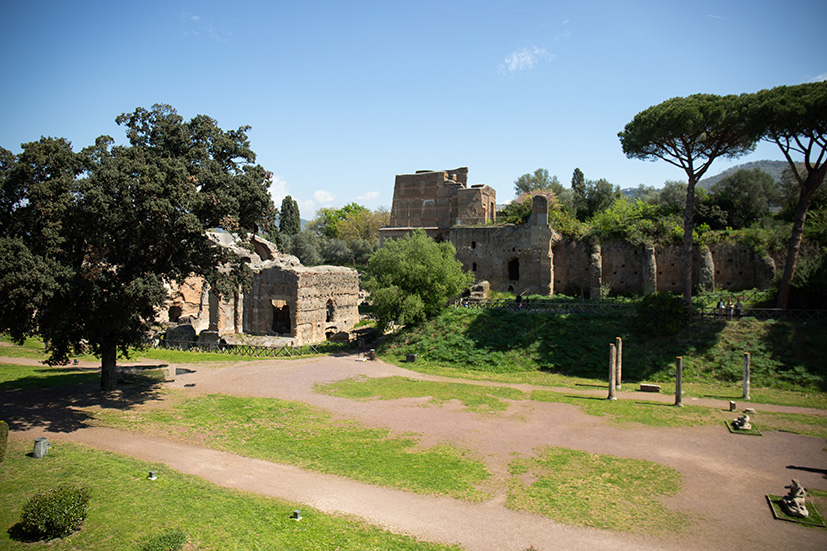
Villa Adriana is one of Italy’s most extraordinary archaeological treasures—a place where art, architecture, and history come together to create a unique experience. The grandeur of the complex and the innovative architectural solutions reflect the vision of Emperor Hadrian, a cultured and curious man who incorporated elements from different cultures of the empire into his residence.
A visit to Villa Adriana is not just a journey back in time to explore ancient Rome, but also an opportunity to immerse yourself in the beauty of the Tivoli countryside, in a setting rich in natural and scenic charm. Whether you’re passionate about archaeology, a history lover, or simply looking for a day trip from Rome, Villa Adriana promises to offer you an unforgettable experience.
As I mentioned at the beginning, this is a museum I never tire of returning to, and I’m sure that once you visit it, you too will feel the desire to come back again—to discover new details and once again be enchanted by this extraordinary fragment of Roman imperial history.
This article is part of the “Hidden Treasures of Tivoli” series, dedicated to the most interesting and lesser-known itineraries of the city. For more insights into Tivoli’s other treasures, check out the articles in the dedicated section.
Enjoyed this article?
Support my work and help me create more Sardinia travel guides like this one.

Subscribe to my Newsletter