

Reading time: 10 minutes
Table of Contents
- Introduction
- Malloreddus (Sardinian gnocchetti): history and recipes
- Culurgiones: the art of braiding and regional fillings
- Fregola: hand-rolled semolina pasta
- Other Types of Fresh Sardinian Pasta
- The role of fresh pasta in Sardinian culinary tradition
- Conclusion
Introduction
Sardinian cuisine is a true treasure trove of flavors, techniques, and traditions rooted in centuries of history. Among the many culinary gems this magnificent island offers, traditional Sardinian pasta holds a place of honor, representing one of the most iconic symbols of Sardinian cooking. If you're wondering what to eat in Sardinia during your visit, you absolutely shouldn't miss the opportunity to taste the various types of fresh pasta that are part of the island’s most beloved and appreciated traditional dishes.
Personally, over the years I've developed a genuine passion for Sardinia’s typical pasta. Every time I visit the island, I’m always struck by the dedication and love Sardinians put into preserving their culinary traditions. In almost every home, you'll find a stash of malloreddus or fregola ready to be cooked following recipes passed down through generations. I was lucky enough to witness the preparation of culurgiones by the skilled hands of a Sardinian woman, and I can assure you that it’s an almost hypnotic experience—each movement embodies centuries of history and craftsmanship.
Traditional Sardinian pasta stands out for the originality of its shapes, the authenticity of its ingredients, and techniques passed down from one generation to the next. Every shape tells a story, is tied to a specific region, and reflects the cultural identity of the communities that created and preserved it over time. Malloreddus, culurgiones, and fregola are three emblematic examples of this tradition: three completely different pasta types, yet united by their roots in Sardinia’s rich culinary heritage.
In this article, we’ll explore these three cornerstones of traditional Sardinian pasta, discovering their origins, preparation methods, traditional recipes, and their role in modern Sardinian cuisine. A journey through flavors, ancient gestures, and stories that will help you better understand one of the most fascinating aspects of this extraordinary island’s gastronomic culture.
If you're planning a trip to Sardinia and wondering what to try, this article will serve as a valuable guide to help you navigate some of the most important traditional Sardinian dishes made with fresh pasta—allowing you to fully appreciate the culinary experience that this generous land has to offer.
I malloreddus (sardinian gnocchetti): history and recipes
The origins of malloreddus
Malloreddus, also known as Sardinian gnocchetti, are perhaps the most iconic pasta shape in Sardinian cuisine. Their name comes from the Sardinian word "malloru", meaning "calf", with the diminutive suffix "eddus", likely referring to their shape, which resembles little calves. These small ridged semolina gnocchi are among the most well-known traditional Sardinian dishes, even beyond the island’s borders.
The origins of malloreddus are deeply rooted in the peasant history of Sardinia, particularly in the Campidano area, located in the central-southern part of the island. This pasta shape was born out of the need to create a hearty dish using simple, readily available ingredients: durum wheat semolina, water, and a pinch of salt. The ridged texture of Sardinian gnocchetti is not just an aesthetic feature—it also serves a practical purpose: the grooves help the pasta hold onto sauces better, enhancing the flavor of the dish.
In Sardinian tradition, malloreddus were considered a festive dish, prepared for special occasions such as weddings and celebrations. In particular, during peasant weddings, it was customary to offer the newlyweds "malloreddus a sa campidanesa" as a wish for prosperity and abundance for their new family.

How malloreddus are made
The traditional preparation of malloreddus requires few ingredients but a certain degree of manual skill. The basic dough is made of durum wheat semolina, lukewarm water, and a pinch of salt. In some variations—especially in more modern recipes—a hint of saffron may also be added, giving the pasta its characteristic golden yellow color and unmistakable aroma.
Once a firm and homogeneous dough is obtained, it is shaped by hand into thin ropes, which are then cut into small pieces. Each piece is then ridged using a traditional tool called the "ciuliri" or "rigamalloreddus", a kind of wicker basket with a ridged bottom. Alternatively, one can use a grater or, in modern kitchens, a specific wooden tool known as a "rigagnocchi".
The traditional gesture involves pressing each piece of dough with the thumb against the ciuliri, sliding it slightly to give it the characteristic concave and ridged shape. This movement, repeated hundreds of times, is one of the most iconic gestures of Sardinian culinary tradition, passed down from generation to generation by the women of the island.
After being shaped, the malloreddus are left to dry slightly before cooking, which is done in plenty of salted water for a few minutes, until they rise to the surface.
Traditional recipes with malloreddus
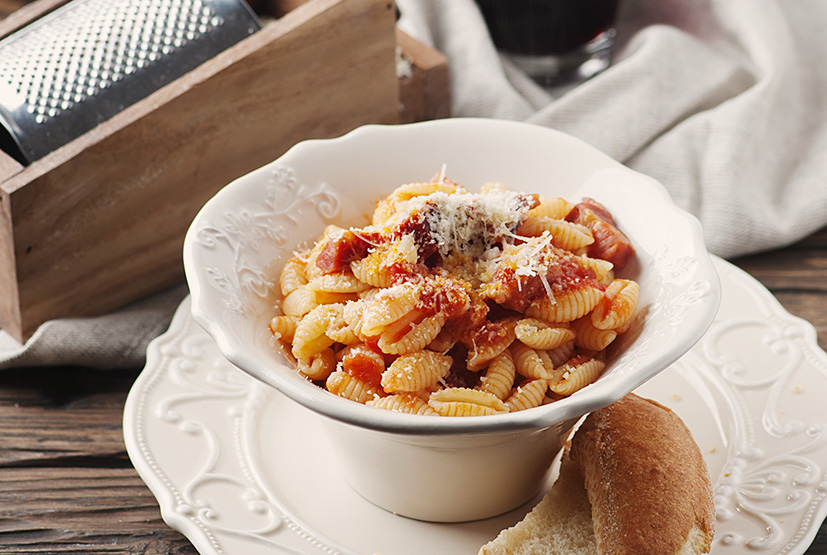
The most famous and traditional way to enjoy malloreddus is undoubtedly "sa cumbida", better known as "malloreddus alla campidanese". This is one of the most iconic Sardinian dishes, and a must-try if you're wondering what to eat in Sardinia during your stay.
The dish features a ragù made with fresh Sardinian sausage, onion, tomato, basil, and a generous grating of aged Sardinian pecorino cheese. In some versions, a pinch of saffron is added to the pasta dough or the sauce, for extra color and aroma. This rich and flavorful sauce pairs perfectly with the ridged texture of Sardinian gnocchetti, which hold the sauce in every groove.
Another traditional recipe includes fresh tomato sauce, basil, and a generous sprinkling of pecorino cheese—a lighter but equally delicious version. In coastal areas, malloreddus are sometimes served with fish or seafood sauces, creating an interesting combination of land and sea flavors.
In the Cagliari area, there is also a version called "a brodu", in which malloreddus are served in a broth-based soupwith meat broth, tomato, and beans—a particularly hearty and comforting dish, ideal for the winter months.
If you're exploring Sardinian cuisine and wondering where to eat in Sardinia to enjoy authentic malloreddus, we recommend looking for traditional trattorias and agriturismi, where the dish is prepared following recipes passed down through generations, using high-quality local ingredients.
Culurgiones: the art of braiding and regional fillings
History and cultural significance of Culurgiones
Culurgiones are a true masterpiece of Sardinian cuisine—a uniquely shaped ravioli that is far more than just a pasta type: it’s a cultural symbol, a culinary work of art that holds within it history, tradition, and identity. Originating mainly from the Ogliastra region, in the central-eastern part of Sardinia, Culurgiones are among the island’s most fascinating and complex traditional dishes, both in terms of appearance and flavor.
The name "Culurgiones" probably comes from the Latin "culurgium", a term that referred to a small bag or pouch. In Sardinian culture, these special ravioli carry a deep symbolic meaning, associated with fertility and abundance. Their shape, reminiscent of an ear of wheat, is a tribute to peasant culture and the cycle of the seasons, representing a wish for bountiful harvests and prosperity.
Traditionally, Culurgiones were a festive dish, prepared on special occasions such as Easter, Carnival, or patron saint celebrations. Their preparation was a moment of sharing and social bonding: women from the village would gather to make large quantities of Culurgiones, passing down techniques and secrets in a festive, collaborative atmosphere.
In 2015, the Culurgiones of Ogliastra were granted IGP (Protected Geographical Indication) status, officially recognizing their origin and link to the territory, and helping to preserve and promote this extraordinary product of Sardinian gastronomy.

The “Spighetta” Closure
What makes Culurgiones unique in the landscape of Italian stuffed pasta is their distinctive “spighetta” or “ear-of-wheat” closure, a complex and fascinating sealing technique that requires remarkable manual skill and long practice to master.
The dough for Culurgiones is made from durum wheat semolina, water, and a pinch of salt, similar to that used for malloreddus, but kneaded until a thin sheet is obtained. This sheet is then cut into discs of about 7–8 cm in diameter, on which the filling is placed.
The sealing process is the most delicate and artistic phase of the preparation: the pasta disc is folded in half over the filling, but instead of being simply sealed, it is closed with a series of overlapping pinches that, starting from one end, proceed to the other, creating a pattern reminiscent of a wheat ear or braid.
This closure is not only decorative but also practical: the spighetta structure creates an airtight seal that prevents the filling from leaking out during cooking while keeping the pasta thin and delicate. Each family, village, and even each individual cook has their own specific technique for creating the spighetta, with small variations that make each Culurgione unique and recognizable.
Regional Variants of the Filling
While the shape of Culurgiones is relatively standardized, the filling offers numerous regional variations, reflecting the biodiversity and culinary traditions of the different areas of Sardinia.
The most well-known version is from Ogliastra, with a filling made from mashed boiled potatoes, fresh or aged pecorino cheese, garlic, fresh mint, and a drizzle of extra virgin olive oil. This delicate yet flavorful filling is perfectly balanced, with the freshness of mint lightening the richness of the cheese and potatoes.
In the areas of Cagliari and Campidano, the filling may also include fresh ricotta, while in some parts of Barbagia, it can include sautéed onions. In certain localities of Logudoro and Gallura, Culurgiones may be filled with ricotta and spinach or chard, in a variation reminiscent of traditional mainland ravioli.
During Lent, in some parts of the island, “Culurgiones de Coja” were prepared, with a filling based on chard, potatoes, and cheese, without any animal fat to respect religious fasting.
These regional variations are part of the richness of Sardinian cuisine, which has been able to adapt and reinterpret recipes based on locally available resources, creating a gastronomic heritage of extraordinary variety.
How to Serve Culurgiones
Culurgiones are cooked in plenty of salted water until they float to the surface, usually for 8–10 minutes, depending on their size and the thickness of the pasta. Once cooked, they can be served in various ways, following traditions that vary from region to region.
The most classic and traditional dressing is a fresh tomato and basil sauce, simply made with ripe tomatoes, garlic, extra virgin olive oil, and fresh basil. This simplicity allows the flavor of the filling and the delicacy of the pasta to shine through.
In some areas, Culurgiones are topped with a simple tomato sauce and a sprinkling of pecorino cheese, while in others, a richer sauce made from tomato and fresh sausage is preferred, similar to that used for malloreddus alla campidanese.
On festive occasions, Culurgiones may be served “with butter and sage,” a less traditional but very appreciated preparation, where they are sautéed in a pan with melted butter and fresh sage leaves, then topped with a generous grating of pecorino.
In summer, especially in coastal areas, it is not uncommon to find Culurgiones served with light sauces made from fresh cherry tomatoes and aromatic herbs—a fresher version well-suited to the warm season.
If you're traveling in Sardinia and looking for where to eat authentic Culurgiones dishes, we recommend exploring the traditional trattorias of Ogliastra and Barbagia, where this dish is still handmade following the most traditional recipes, including the characteristic spighetta closure.
Tasting Sardinian products is a delight—but making them with your own hands takes the experience to a whole new level. If you're passionate about traditional food and want to dive deeper into local culture, consider joining a Culurgiones cooking class in Ogliastra, guided by a true expert in the field.
Hosted on a charming estate in the countryside near Jerzu, this hands-on experience is led by Lidia Muceli, who has over forty years of experience in Sardinian pasta-making. You’ll learn the history behind Culurgiones d’Ogliastra, discover the traditional ingredients like su fiscidu or casu e fitta, and practice the iconic spighitta closure technique that makes these stuffed pasta pockets so unique.
Click here to book your authentic Culurgiones cooking class.
Fregola: Hand-Rolled Semolina Pasta
Origins and Preparation of Fregola
Fregola (or fregula) is a unique type of pasta that represents one of the most authentic expressions of Sardinian cuisine, particularly from the southwestern part of the island. It consists of small balls of durum wheat semolina, varying in size, whose origins date back to ancient times, testifying to the cultural ties between Sardinia and North Africa.
Many scholars believe that fregola is related to couscous, introduced to the island during the Punic rule and later adapted to local traditions. What sets fregola apart from other similar pasta types is the toasting process after the formation of the grains, which gives it a characteristic amber color and a slightly toasted, unmistakable flavor.
The traditional preparation of fregola is long and labor-intensive, once done entirely by hand. It begins with a dough made from durum wheat semolina and water, worked in a large terracotta bowl called a scivedda. With a circular motion of the hands, the dough is rolled inside the bowl, forming small irregular balls.
This repetitive motion, performed patiently for hours, gives the pasta its name: fregare in Italian or sfregare in Sardinian means “to rub,” referring to the action of forming the grains. Once shaped, the fregola grains are sifted to sort them by size, then dried in the sun or near a fireplace.
The final stage, which gives fregola its distinctive flavor, is oven toasting, which turns the grains from white to a warm golden-amber color. This process not only changes the color but also develops complex aromas that enrich the pasta’s taste.
Today, fregola is also produced industrially, but many Sardinian families, especially in rural areas, continue to make it by hand, preserving a tradition that is an important part of the island’s culinary heritage.

Traditional Fregola Dishes
The versatility of fregola makes it suitable for numerous preparations, from simple first courses to more elaborate dishes. In traditional Sardinian cuisine, fregola is mainly used in two ways: in broth or “dry,” with sauces that vary according to the area and season.
One of the best-known Sardinian dishes is fregola with clams (fregola con le arselle), a perfect example of Sardinia’s land-and-sea cuisine. The fregola is cooked in a broth made from the clams, which gives it a delicate marine flavor, and then served with shelled clams. This dish is a must-try for anyone wondering what to eat in Sardinia during a visit to the coastal regions.
Another traditional preparation is fregola with tomato sauce and sausage, a hearty and flavorful dish where the pasta is cooked directly in the sauce, absorbing all the flavors. The slightly grainy texture of fregola pairs beautifully with the softness of the sausage and the acidity of the tomato.
In the island’s inland areas, it is common to find fregola in mutton broth or fregola with sausage—rustic and comforting dishes that reflect Sardinia’s pastoral traditions. Fregola can also be used to prepare legume soups, such as fregola with beans or fregola with chickpeas—nourishing dishes that were once staples of peasant families’ daily diet.
During the summer, fregola is often served as a salad, dressed with seasonal vegetables, olives, fresh cheese, and a drizzle of extra virgin olive oil—a fresh and light version ideal for the warmer months.

Fregola in Contemporary Cuisine
In recent years, fregola has experienced a renaissance, not only in Sardinia but throughout Italy and abroad, thanks to its versatility and unique flavor. Contemporary chefs have begun using it in innovative preparations, showing how this ancient pasta can adapt perfectly to modern tastes.
Fregola is now used in risotto-style dishes, paired with fine seafood such as scampi and lobster, or combined with seasonal vegetables in flavorful vegetarian plates. Its ability to absorb the flavors of the sauce makes it perfect for rich and tasty preparations, while its unique texture adds interest even to simpler dishes.
Some chefs are even experimenting with sweet fregola, using it in innovative desserts made with milk, honey, and dried fruit, reinterpreting ancient peasant recipes with a modern twist.
The growing popularity of fregola outside Sardinia has led to an increase in production, with artisanal producers preserving traditional methods while experimenting with new variations, such as whole grain fregola or those flavored with herbs and spices.
This evolution highlights the vitality of Sardinian cuisine, which manages to preserve its most authentic traditions while also renewing itself, creating new flavors and reimagining typical Sardinian dishes in a contemporary key.
Other Types of Fresh Sardinian Pasta
In addition to malloreddus, culurgiones, and fregola, Sardinian cuisine features many other types of fresh pasta. While these may be less known outside the island, they are just as representative of Sardinia’s rich gastronomic heritage.
Among these, worth mentioning are lorighittas, a uniquely shaped pasta resembling small braided rings, typical of the village of Morgongiori in the Oristano area. Traditionally prepared for All Saints' Day, lorighittas require a complex technique and are usually served with a sauce made from tomato and rooster meat.

Another remarkable pasta is su filindeu ("the threads of God"), considered one of the rarest and most difficult pastas to make in the world. Originating from the Nuoro area, it is made by repeatedly stretching and folding a dough of semolina and water until it forms ultra-thin threads. These are then woven into a lattice on a special frame and left to dry. Filindeuis traditionally served in a sheep broth with grated pecorino cheese and is reserved for special occasions, such as the feast of Saint Francis in Lula.
Maccarrones de busa, on the other hand, are a kind of tube-shaped pasta similar to mezze maniche, made by wrapping sheets of dough around a knitting needle or a thin reed. This pasta is typical of the Gallura region and is often served with meat or game-based sauces.
These are just a few examples of the extraordinary variety of fresh pastas that enrich Sardinian cuisine—each with its own history, preparation techniques, and traditional pairings. If you’re a food lover wondering what to eat in Sardinia, it's well worth exploring these lesser-known specialties, which are true treasures of island culinary tradition.
The Role of Traditional Pasta in Sardinian Gastronomy
In Sardinia, pasta is not merely food—it’s a cultural symbol, embodying the history, traditions, and values of Sardinian society. For centuries, making fresh pasta at home was not only a dietary necessity but also a cherished moment of sharing and passing on knowledge between generations.
Traditionally, pasta making was mainly a female activity, where mothers, daughters, and grandmothers worked together, transmitting techniques, secrets, and recipes. These communal sessions were also social occasions, strengthening family and community bonds.
Each type of pasta holds a specific place in the Sardinian culinary calendar: there are pastas for weekdays and festive days, for Lent and Christmas, for weddings and even funerals. This complexity reflects the central role food—especially pasta—plays in Sardinian culture, marking the rhythms of both individual and communal life.
Today, despite social changes and industrialization, homemade fresh pasta remains a living tradition in many Sardinian households, especially during celebrations and holidays. At the same time, numerous small artisanal businesses have emerged, producing fresh pasta with traditional methods and helping preserve and share this culinary heritage.
Conclusion
Traditional pasta is one of the most precious treasures of Sardinian cuisine—a wealth of flavors, shapes, and traditions that tell the story and identity of this extraordinary island. Malloreddus, culurgiones, and fregola are just three of the best-known examples from a much broader variety of pastas that define Sardinian gastronomy.
I deeply admire the passion with which Sardinians preserve and pass on these gastronomic traditions. I’ve seen how even in the most modern homes, ancient pasta-making techniques are kept alive.
What makes Sardinian fresh pasta so special is not just the quality of its ingredients or the richness of its flavors, but also the cultural and symbolic value it carries. Every pasta shape tells a story, represents a place, and holds knowledge passed down from generation to generation.
If you're planning a trip to Sardinia, I encourage you to include these traditional pastas in your culinary itinerary. Ask not only what to eat in Sardinia or where to eat in Sardinia, but also what stories, what traditions, and what people lie behind the dishes you’ll taste. Because Sardinian cuisine isn’t just a culinary experience—it’s a cultural journey into the soul of an island that has made its food a cornerstone of its identity.
And if you can’t make it to Sardinia, you can always try making these traditional Sardinian dishes at home. There are plenty of detailed recipes online, and with a bit of practice, you’ll be able to bring an authentic taste of Sardinia to your own table. Personally, I’ve learned to make malloreddus with reasonable success, and I can assure you that—even if they’re not as perfect as a Sardinian mamma would make—the joy of eating pasta you’ve made with your own hands is simply unbeatable.
Enjoy your meal—or as they say in Sardinia, “Bona appetitu!”
Enjoyed this article?
Support my work and help me create more Sardinia travel guides like this one.
This article is part of the series “Gastronomic Treasures of Sardinia”, dedicated to exploring the island’s culinary traditions. For more on Sardinian specialties, check out the other articles in the series.

Subscribe to my Newsletter