

Reading time: 15 minutes
Contents
- Origin and Geography
- Brief History of Sardinia
- Language and Dialects
- Geography and Nature
- Main Cities
- How to Reach Sardinia
- What Sardinia is Famous For
- Peoples of Sardinia
- Tourism in Sardinia
- When to visit Sardinia
- Conclusion
Origin and Geography
Sardinia (Italian: Sardegna) is the second largest island in the Mediterranean Sea after Sicily. The island covers an area of approximately 24,090 km², making it a true treasure not only for Italy but for the entire Mediterranean. In shape, the island resembles a human footprint, as often noted by travelers looking at it on a map.
The origin of the island dates back centuries — Sardinia was formed about 500 million years ago as a result of geological processes related to tectonic plate movements. Being part of the continental shelf, the island has predominantly mountainous terrain, although there are also flat areas, especially in the west and south.
Located in the central part of the Mediterranean Sea, Sardinia is washed by the Tyrrhenian Sea to the east, the Sardinian Sea to the west, and the Mediterranean Sea to the south. The island's closest neighbors are Corsica (a French island) to the north, separated from Sardinia by the Strait of Bonifacio, only 11 km wide, and the coast of mainland Italy to the east, about 190 km away.
Brief History of Sardinia
Ancient History
The history of Sardinia is rich and multifaceted, with roots in prehistoric times. Archaeological findings indicate that the first humans appeared on the island during the Paleolithic period, around 150,000 years ago. However, the true flowering of ancient Sardinia is associated with the Nuragic civilization, which existed from approximately 1800 to 238 BCE.
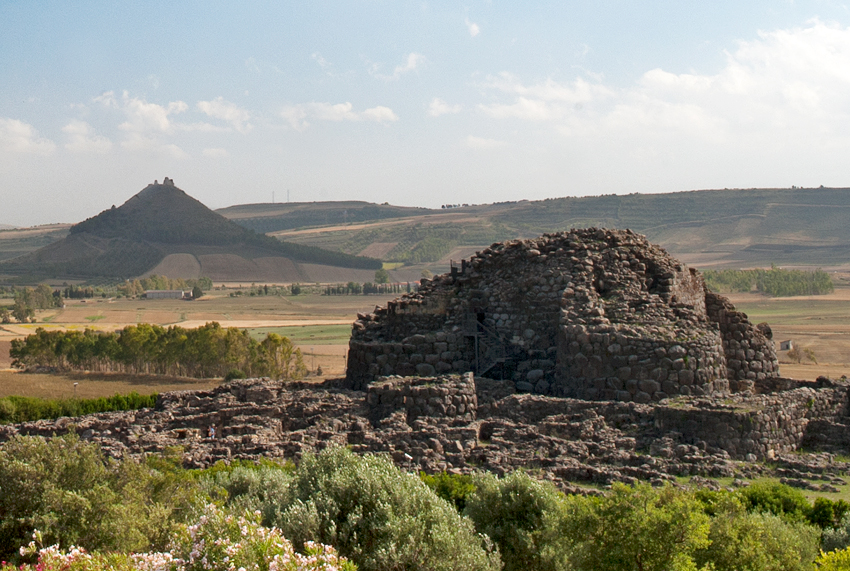
The Nuragic culture, named after the characteristic stone towers called nuraghi, was a unique phenomenon with no direct analogues in other parts of the Mediterranean. The island has more than 7,000 nuraghi, many of which have survived to this day and are important tourist attractions. The most famous of these is the Su Nuraxi complex in Barumini, included in the UNESCO World Heritage List.
Under Different Empires
After the end of the Nuragic culture era, Sardinia came under Carthaginian rule around 500 BCE, and then, following the Punic Wars, passed under the control of the Roman Empire in 238 BCE. Roman rule continued until the fall of the Western Roman Empire in the 5th century CE.
With the collapse of the Roman Empire, a period of frequent ruler changes began. The island successively came under the rule of:
- Vandals (from 456)
- Byzantine Empire (from 534)
- Arab Emirates (raids in the 8th-9th centuries)
- Local Judicates (autonomous states, from the 9th century)
- Republics of Pisa and Genoa (from the 11th century)
- Kingdom of Aragon (from 1323)
- Spanish Empire (from 1479)
Each of these periods left its mark on the culture, architecture, and traditions of Sardinia, creating the unique cultural blend that we can observe today.
Sardinia and the Savoy Dynasty
An important turning point in the island's history occurred in 1720 when, under the Treaty of The Hague, which ended the War of the Spanish Succession, Sardinia was transferred to the House of Savoy — the ruling dynasty of Piedmont, a region in northwestern Italy. This resulted in the formation of the Kingdom of Sardinia, which, despite its name, was governed from Turin, the capital of Piedmont.
This period was marked by a series of reforms aimed at modernizing and integrating the island with the mainland possessions of the House of Savoy. However, many Sardinians perceived the new rulers as foreign conquerors, and relations between the island and the continental administration were often tense.
An interesting fact: although Piedmont was the political and economic center of the kingdom, the official name "Kingdom of Sardinia" was maintained until the unification of Italy, emphasizing the formal significance of the island for the Savoy dynasty.
Risorgimento
In 1861, as a result of the wars for the unification of Italy (Risorgimento), the Kingdom of Sardinia transformed into the Kingdom of Italy under the leadership of King Victor Emmanuel II. Thus, Sardinia became part of a unified Italian state.
The transition to a unified Italy did not immediately bring prosperity to the island. For many decades, Sardinia remained one of the least developed regions of the new country, suffering from economic problems, banditry, and mass emigration. Only in the second half of the 20th century, especially with the development of tourism and the acquisition of autonomous region status in 1948, did the economic situation on the island begin to significantly improve.
Today, Sardinia is one of Italy's five autonomous regions, with special powers in the areas of finance, education, and cultural policy, allowing it to preserve and develop the island's unique cultural heritage.
Language and Dialects
The official language of Sardinia, as in all of Italy, is Italian. However, the linguistic situation on the island is much more complex and interesting. The Sardinian language (sardo) is recognized as the region's second official language and has been included by UNESCO in the list of endangered languages.
Sardinian is not a dialect of Italian but an independent Romance language that developed separately from Latin and is considered the most conservative of all Romance languages, having preserved many features of the Latin original. Linguists note that the Sardinian language is closer to Latin than modern Italian.
There are several main dialects of the Sardinian language on the island:
- Logudorese (logudorese) — considered the most "pure" and archaic variant of the Sardinian language, prevalent in the central part of the island.
- Campidanese (campidanese) — used in the south of the island, including the city of Cagliari.
- Gallurese (gallurese) and Sassarese (sassarese) — northern dialects that have been strongly influenced by Corsican and Tuscan languages.
- Catalan (catalano) — not a dialect of Sardinian, but traditionally used in the city of Alghero in the northwest of the island, where Catalan cultural influence has been preserved since the times of Aragonese rule.
Despite the 20th-century Italianization policy, the Sardinian language continues to be actively used, especially in rural areas and among the older generation. In recent decades, there has been a growing interest in preserving and reviving the Sardinian language, including its teaching in schools and use in public life.
Geography and Nature
Beaches and Coastline
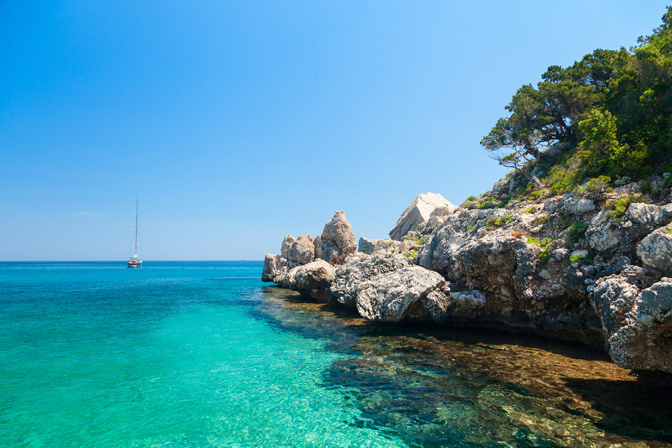
One of the main attractions of Sardinia is, undoubtedly, its coastline. The length of the island's shoreline is about 1,849 kilometers, and the number of beaches is simply astounding.
The coast of Sardinia is extremely diverse: here you can find both long sandy beaches with fine white sand and secluded coves hidden between rocks, accessible only by sea or after a long hike. Many of Sardinia's beaches regularly appear in lists of the world's most beautiful beaches thanks to the clearest transparent water and untouched nature.
The most famous beaches are located on the following coasts:
- Northeastern coast (Costa Smeralda) — famous for its emerald waters, white beaches, and exclusive resorts. The beaches of Pevero, Romazzino, and Principe are among the most beautiful on the island.
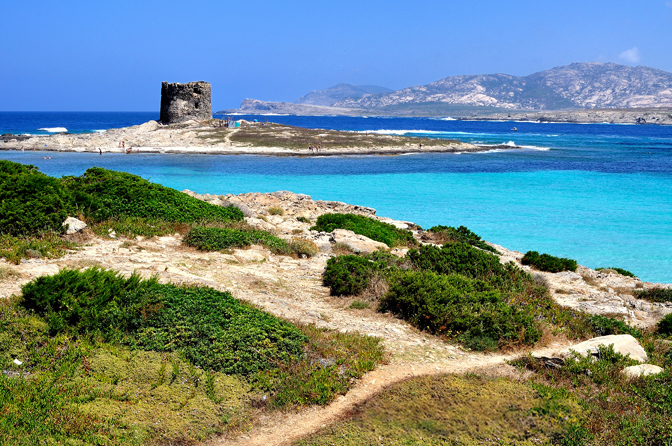
- Northwestern coast (Alghero and surroundings) — offers a combination of picturesque beaches, such as La Pelosa in Stintino, and impressive rocky formations.
- Eastern coast (Gulf of Orosei) — known for its pristine coves, such as Cala Luna and Cala Goloritzé, often accessible only by boat or after a challenging trek.
- Southern coast (the coast around Cagliari) — characterized by extensive sandy beaches, including the famous Poetto, and charming resort towns.
- Western coast (Sinis Peninsula) — offers wilder and less visited beaches, such as Is Arutas with its famous sand made of small quartz grains.
It is important to note that unlike many other Mediterranean destinations, a significant part of Sardinia's coastline remains relatively untouched thanks to strict environmental protection laws. This helps preserve the natural beauty of the beaches and prevent excessive development of coastal zones.
Mountains and Inland Areas
Although Sardinia is primarily associated with the sea and beaches, the inland areas of the island are no less interesting. More than 80% of Sardinia's territory is covered by mountains and hills, creating dramatic landscapes and providing excellent opportunities for ecotourism.
The main mountain range of the island is Gennargentu, located in the central-eastern part of Sardinia. Here lies the highest point of the island — Punta La Marmora, reaching 1,834 meters above sea level.
The inland areas of Sardinia are characterized by:
- Diverse ecosystems — from Mediterranean maquis (shrubland) to oak and chestnut forests at higher elevations.
- Rich wildlife — the island is home to many endemic species, including the mouflon (wild sheep that has become a symbol of Sardinia) and the Mediterranean deer.
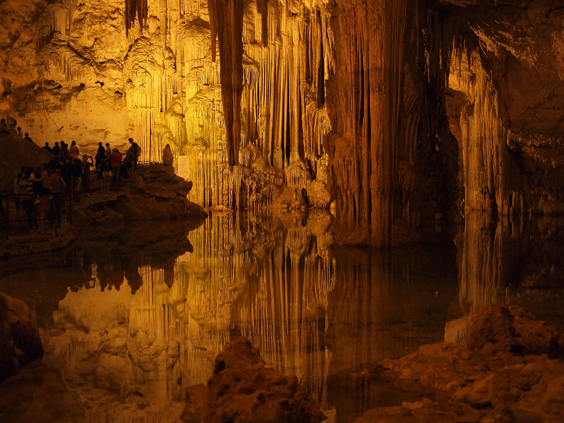
- Geological attractions — such as the Giara di Gesturi plateau, known for its wild horses, or the karst caves of Grotte di Nettuno in Alghero.
- Archaeological monuments — in addition to nuraghi, the island preserves prehistoric tombs ("Domus de Janas"), sacred springs, and other ancient structures.
The inland areas are also known for their picturesque villages, where traditional ways of life and crafts are preserved, and where famous Sardinian products are produced — cheeses, wines, and traditional bread.
Main Cities
Sardinia is a region with a relatively low population density, home to about 1.6 million people. The island's cities are diverse in their history, architecture, and atmosphere, reflecting the complex cultural heritage of this land.
Cagliari — the capital and largest city of Sardinia with a population of about 150,000 (around 430,000 in the metropolitan area). Located on the southern coast, the city boasts the historic center of Castello with its medieval towers and bastions, an impressive Roman amphitheater, a lively waterfront, and the kilometer-long Poetto beach. Cagliari is the administrative, cultural, and economic center of the island, as well as an important port and the location of the main airport.
Sassari — the second-largest city with a population of about 130,000. Located in the northwest of the island, it has a rich cultural heritage influenced by Genoese and Spanish rule. The city is known for its university (one of the oldest in Italy, founded in 1562), the Gothic Cathedral of San Nicola, and the colorful Candelieri festival, included in UNESCO's list of intangible cultural heritage.
Olbia — an important port city on the northeastern coast with a population of about 60,000, serving as a gateway to the prestigious Costa Smeralda. In recent decades, Olbia has transformed from a sleepy port town into a dynamic tourist center with a modernized airport and seaport.
Alghero — a charming coastal city in the northwest with a population of about 44,000, known for its Catalan roots. In the historic center, surrounded by powerful fortress walls, Catalan is still spoken, and the local cuisine and architecture reflect this unique cultural heritage. The city is also a popular tourist destination due to its proximity to beautiful beaches and the airport.
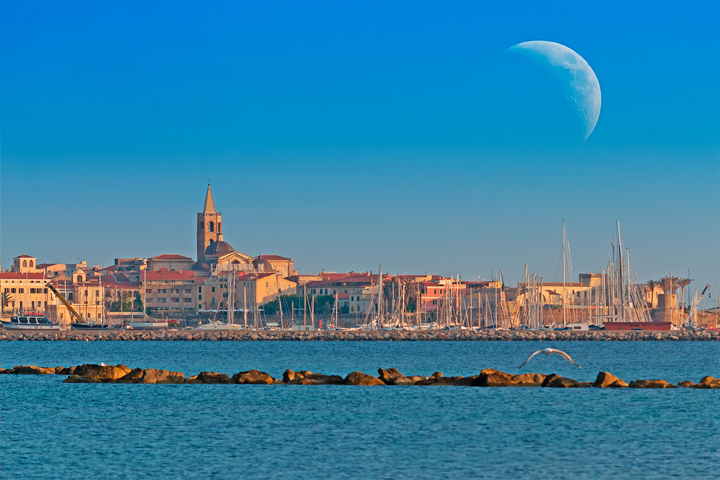
Nuoro — located in the mountainous central part of the island, a city with a population of about 36,000, considered the heart of traditional Sardinian culture. Nuoro is known for its literary traditions, ethnographic museum, and as a starting point for exploring the Gennargentu mountain range.
Oristano — a city with a population of about 32,000 on the western coast, the former capital of the medieval Judicate of Arborea. The city is famous for its historical carnival Sartiglia with equestrian competitions and a beautiful historic center.
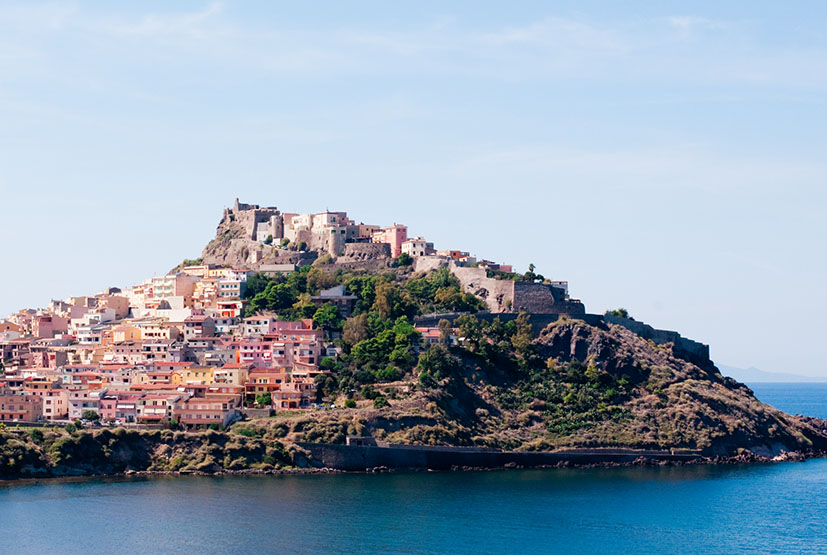
In addition to these major cities, Sardinia abounds with charming small towns and villages, each with its own character and traditions. Particularly noteworthy are the picturesque medieval towns of Bosa and Castelsardo and the villages of the Barbagia region, where ancient customs and traditional ways of life are preserved.
How to Get to Sardinia
Airports
Sardinia has three main international airports that provide convenient connections with mainland Italy and many European countries:
Cagliari Elmas Airport (CAG) — the largest airport on the island, located 7 km from the center of Cagliari. It offers year-round flights to major Italian cities (Rome, Milan, Naples) and seasonal flights to many European countries. The airport serves both regular and budget airlines.
Olbia Costa Smeralda Airport (OLB) — the second busiest airport, located in the northeast of the island, 4 km from the center of Olbia. It is especially active during the summer season when it handles numerous flights from the UK, Germany, France, and other European countries. The airport is the main gateway for tourists heading to Costa Smeralda.
Alghero-Fertilia Airport (AHO) — located in the northwest of the island, 10 km from the city of Alghero. It serves both domestic and international flights, especially from the UK, Scandinavian countries, and Spain. This airport is preferred for those planning to explore the northwestern part of Sardinia.
During high season (June-September), air connections to Sardinia significantly expand, with numerous charter and seasonal flights from various European cities. For travelers from Russia, the most convenient option is usually a flight through Rome or Milan with a subsequent connection to one of the Sardinian airports.
Ports
An alternative way to reach Sardinia is by sea. The island has several major ports connected by regular ferry lines with mainland Italy, France (Corsica), and Spain:
Port of Cagliari (Porto di Cagliari) — the main port in the south of the island, receiving ferries from Naples, Palermo (Sicily), and Civitavecchia (near Rome).
Port of Porto Torres — an important port in the north of the island, with frequent services to Genoa, Marseille (France), and Barcelona (Spain).
Port of Olbia — the main port in the northeast, serving routes from Livorno, Genoa, Civitavecchia, and the French city of Nice.
Port of Golfo Aranci — located near Olbia, with services mainly from Livorno.
Port of Santa Teresa Gallura — located at the northern tip of the island and is the main point for ferry connections with neighboring Corsica (Bonifacio), with journeys lasting only about 50 minutes.
Port of Arbatax — on the east coast, with seasonal services from Genoa and Civitavecchia.
Ferry journeys take from 5 to 10 hours depending on the route and type of vessel. Many ferries offer overnight services with cabins, allowing you to use your travel time efficiently. Ferries can also transport cars, giving you more freedom to explore the island upon arrival.
It's important to note that during high season, ferry tickets are best booked in advance, especially if you plan to travel with a car.

What Sardinia Is Famous For
Sardinia is known worldwide for several unique features that make it an exceptional place:
Nuragic civilization — as already mentioned, the island is home to thousands of nuraghi, mysterious Bronze Age tower-like structures that have no analogues in the world. These ancient buildings, along with "giants' tombs" and sacred springs, create a unique archaeological landscape that attracts researchers and tourists from all over the world.
Longevity phenomenon — Sardinia is one of the five "blue zones" on the planet where people live significantly longer than the global average. The province of Nuoro is particularly famous for having an unusually high concentration of centenarians. Scientists attribute this phenomenon to a combination of genetic factors, healthy Mediterranean diet, active lifestyle, and strong social connections.
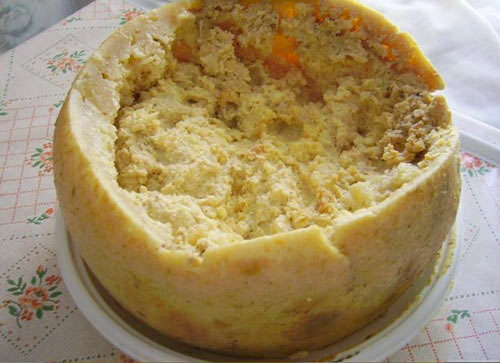
Unique gastronomy — Sardinian cuisine differs from mainland Italian cuisine and includes specialties such as "pane carasau" (thin crispy bread), "porceddu" (spit-roasted suckling pig), "culurgiones" (ravioli stuffed with potato and mint), and "seadas" (fried cheese pastries with honey). The island is also famous for its pecorino (sheep cheese), casu marzu cheese with maggots, and Cannonau wine (strong red wine).
Traditional festivals and costumes — Sardinian festivals, such as the carnival in Oristano (Sartiglia) or the Festival of Saint Efisio in Cagliari, are known for their colorful processions where participants wear carefully preserved traditional costumes unique to each village. Particularly famous are the mystical "mamuthones" figures from Mamoiada with their heavy bells and black masks.
Musical traditions — Sardinia has a rich musical heritage, including "cantos a tenore" — polyphonic singing inscribed on the UNESCO Intangible Cultural Heritage List. The island is also known for its unique wind instruments such as the "launeddas" — a triple reed flute with a three-thousand-year history.
Emerald Coast (Costa Smeralda) — created in the 1960s, this exclusive resort area in the northeast of the island has become synonymous with luxury vacations and attracts celebrities and billionaires from around the world.
Wildlife — Sardinia is home to several endemic species, including the Sardinian deer and mouflon, as well as rare birds such as the bearded vulture and Sardinian falcon. More than 20% of the island's territory is protected as national parks and reserves.
Textile crafts — especially carpets and tapestries from the village of Samugheo and lace from Bosa, created using techniques passed down through generations.
People of Sardinia
Sardinians are known for their distinctive character, shaped by the island's centuries-old history and geographical isolation. Here are several characteristic traits often noted in the inhabitants of Sardinia:
Pride and independence — historically forced to defend themselves against numerous invaders, Sardinians have developed a strong sense of identity and independence. They are proud of their culture and often identify themselves primarily as Sardinians and then as Italians.
Hospitality — despite initial reserve, Sardinians are known for their exceptional hospitality. There is even a saying: "A stranger is a guest sent by God." Once you've earned the trust of a Sardinian, you can count on their loyal friendship and support.
Strong family ties — family plays a central role in Sardinian society. Multi-generational families remain common, especially in rural areas, and Sunday family dinners are an important tradition.
Respect for traditions — Sardinians carefully preserve their ancient traditions, from crafts and cuisine to music and festivals. Even the younger generation often shows interest in cultural heritage and participates in traditional events.
Hard work and endurance — life on the island with its mountainous landscape and historical hardships has shaped Sardinians' resilience and work ethic. They are known for their perseverance and ability to adapt to difficult conditions.
Unhurried approach to life — unlike the stereotypical image of emotional Italians, Sardinians are often more reserved and calm. They value quality of life and maintain a more measured pace, which is especially noticeable in rural areas where the saying "piano piano" (little by little) is still preserved.
Cultural diversity — the historical influence of various civilizations has created a unique mosaic of cultures in Sardinia. Depending on the region of the island, you can observe Catalan influence in Alghero, Genoese traditions in the north, or Spanish heritage in the south.
As a result of all these factors, Sardinians have formed a unique cultural identity that distinguishes them from both continental Italians and other Mediterranean peoples.
Tourism in Sardinia
Tourism is one of the main sectors of Sardinia's economy, providing a significant portion of the region's GDP and creating thousands of jobs. The tourist infrastructure on the island is developed with consideration for preserving natural beauty and cultural heritage.
Costa Smeralda and Luxury Vacations
The symbol of luxury tourism in Sardinia is Costa Smeralda (Emerald Coast) — a 55-kilometer stretch of coastline in the northeast of the island, named for the emerald hue of its coastal waters. This prestigious resort area was created in the 1960s by a consortium led by Prince Karim Aga Khan IV.
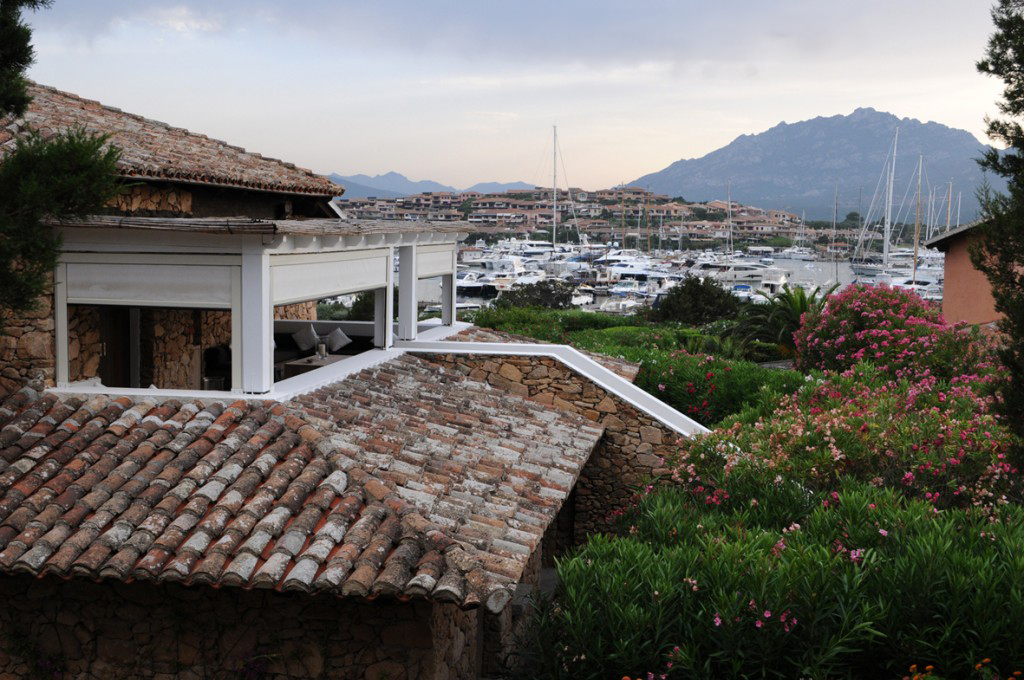
The center of Costa Smeralda is Porto Cervo — an artificially created town with a luxury port capable of accommodating the world's largest yachts, exclusive boutiques, gourmet restaurants, and five-star hotels. Other well-known resorts in this area include Porto Rotondo, Baja Sardinia and Liscia di Vacca, Poltu Quatu.
Costa Smeralda attracts the international elite: celebrities, politicians, businessmen, and members of royal families, especially during peak season (July-August). Real estate and service prices here are comparable to the most expensive resorts in the world, such as Saint-Tropez or Monaco.
A distinctive feature of the resort's architecture is the unique "Costa Smeralda style" — minimalist buildings made of local granite and wood that blend organically into the landscape, with elements inspired by traditional Sardinian architecture. Despite the luxury, there are no high-rise buildings or massive resort complexes that disrupt the natural beauty of the coast.
For luxury vacation enthusiasts, Costa Smeralda offers:
- World-class golf clubs, such as Pevero Golf Club
- Exclusive beach clubs, for example, the famous Phi Beach
- Marinas with a full range of services
- Fine dining in Michelin-starred restaurants
- Luxury brand boutiques
- Elite spa centers
- Prestigious events, including regattas and polo tournaments
Budget Vacations
Despite its reputation as an exclusive destination, Sardinia offers many opportunities for more affordable vacations:
Alternative coastlines — while Costa Smeralda is known for its high prices, other coastlines of the island, such as Costa del Sud in the south, Costa Verde in the west, or the Alghero area in the northwest, offer similarly beautiful beaches and sea, but with more affordable accommodation options.
Agritourism (agriturismo) — rural farms offering accommodation and meals based on their own products have become a popular alternative to traditional hotels. They are not only more affordable but also allow you to experience authentic Sardinian life and cuisine.
Campgrounds — Sardinia has many well-equipped campgrounds, often located in scenic areas near the sea. They range from basic tent sites to comfortable glamping with amenities.
Small towns and villages — accommodation in the interior of the island or in small coastal towns is usually significantly cheaper than in well-known resort areas. Public transportation (although not always regular) allows you to reach popular beaches.
B&Bs and apartments — the short-term rental market in Sardinia is well-developed, with many affordable options from family B&Bs to self-catering apartments.
Low season — visiting Sardinia in May-June or September-October allows you to not only avoid summer crowds and high prices but also enjoy more comfortable temperatures for exploring the island.
Budget gastronomic tourism — instead of expensive restaurants, you can visit local trattorias, agritourism establishments that offer fixed menus (menu fisso) at reasonable prices, or street food festivals (sagre) where you can try local delicacies.
Free attractions — many of Sardinia's natural beauties, including beaches, mountain routes, and some archaeological monuments, are accessible for free or for a small fee.
It's important to note that even in the more affordable parts of Sardinia, quality standards, especially regarding beach cleanliness and general safety, generally remain high, making the island an attractive destination for travelers with different budgets.
When to Visit Sardinia
Choosing the best time to visit Sardinia depends on your interests, budget, and preferred activities. Each season on the island has its own characteristics:
High Season (July-August)
Advantages:
- Ideal sea temperature (24-26°C)
- Maximum number of sunny days
- Full operation of all tourist infrastructure
- Vibrant nightlife
- Numerous festivals and cultural events
Disadvantages:
- High prices for everything — from accommodation to beach equipment rental
- Crowded beaches, especially in popular places
- Necessity of booking everything in advance
- Hot weather (often above 30°C), which can be exhausting for excursions
- Heavy traffic on the roads
Middle Season (May-June and September-October)
Advantages:
- Lower prices (30-50% lower than high season)
- Fewer tourists and a more relaxed atmosphere
- Comfortable temperature for exploring the island (20-25°C)
- Warm sea in September (22-24°C)
- Blooming nature in spring or pleasant autumn colors
Disadvantages:
- Possibly unstable weather, especially in May and October
- Some seasonal establishments may be closed
- The sea can be cool in May-June (18-20°C)
- Limited transportation connections with the mainland
Low Season (November-April)
Advantages:
- Lowest accommodation prices
- Authentic atmosphere without tourists
- Opportunity to see traditional winter festivals
- Ideal time to experience the culture and cuisine
- Excellent opportunities for trekking and nature tourism
Disadvantages:
- Cool and sometimes rainy weather
- Many tourist facilities, restaurants, and hotels closed
- Significantly reduced transportation connections
- Swimming season closed (sea temperature 13-17°C)
- Reduced hours for museums and attractions
Recommendations by vacation type:
- For beach vacations — best time from June to September, with the optimal price/quality balance in June and September
- For excursions and active tourism — May, June, September, and October
- For gastronomic tourism — autumn (grape and olive harvest season)
- For immersion in local culture — winter, especially carnival period (February)
- For nature observation and photography — spring (April-May), when the island is covered with flowers
It's worth noting that Sardinia in the off-season is a completely different experience, allowing you to see the authentic life of the island without tourist bustle. Many travelers, having once discovered winter Sardinia, return at this time of year.
Conclusion
Sardinia is much more than just a popular tourist destination. It's an island with a unique identity, formed by thousands of years of history, interaction of various cultures, and the special connection people have with their land.
From prehistoric nuraghi to luxury resorts of Costa Smeralda, from ancient traditions of mountain villages to the modern urban life of Cagliari — Sardinia offers an amazing variety of experiences for every visitor. Regardless of the region or type of vacation you choose, a special atmosphere that everyone who has ever visited Sardinia values can be felt throughout the island.
Many visitors note that Sardinia makes an almost magical impression — invisible threads connect you to this land, making you return again and again. Perhaps this is related to the Sardinians' special attitude toward life: here they know how to enjoy simple pleasures, value quality over quantity, and find time for things that truly matter.
In a world where tourist destinations are becoming increasingly similar to each other, Sardinia maintains its authenticity and special character. And the best way to understand this island is to come here yourself, explore its beauties unhurriedly, try the local cuisine, talk to residents, and allow this amazing place to reveal its secrets at its own, leisurely pace.
After all, as Sardinians say: "Ci vediamo" — see you soon. And on this island, these words sound not like a farewell, but as a promise of a quick return.
Enjoyed this article?
Support my work and help me create more Sardinia travel guides like this one.

Subscribe to my Newsletter